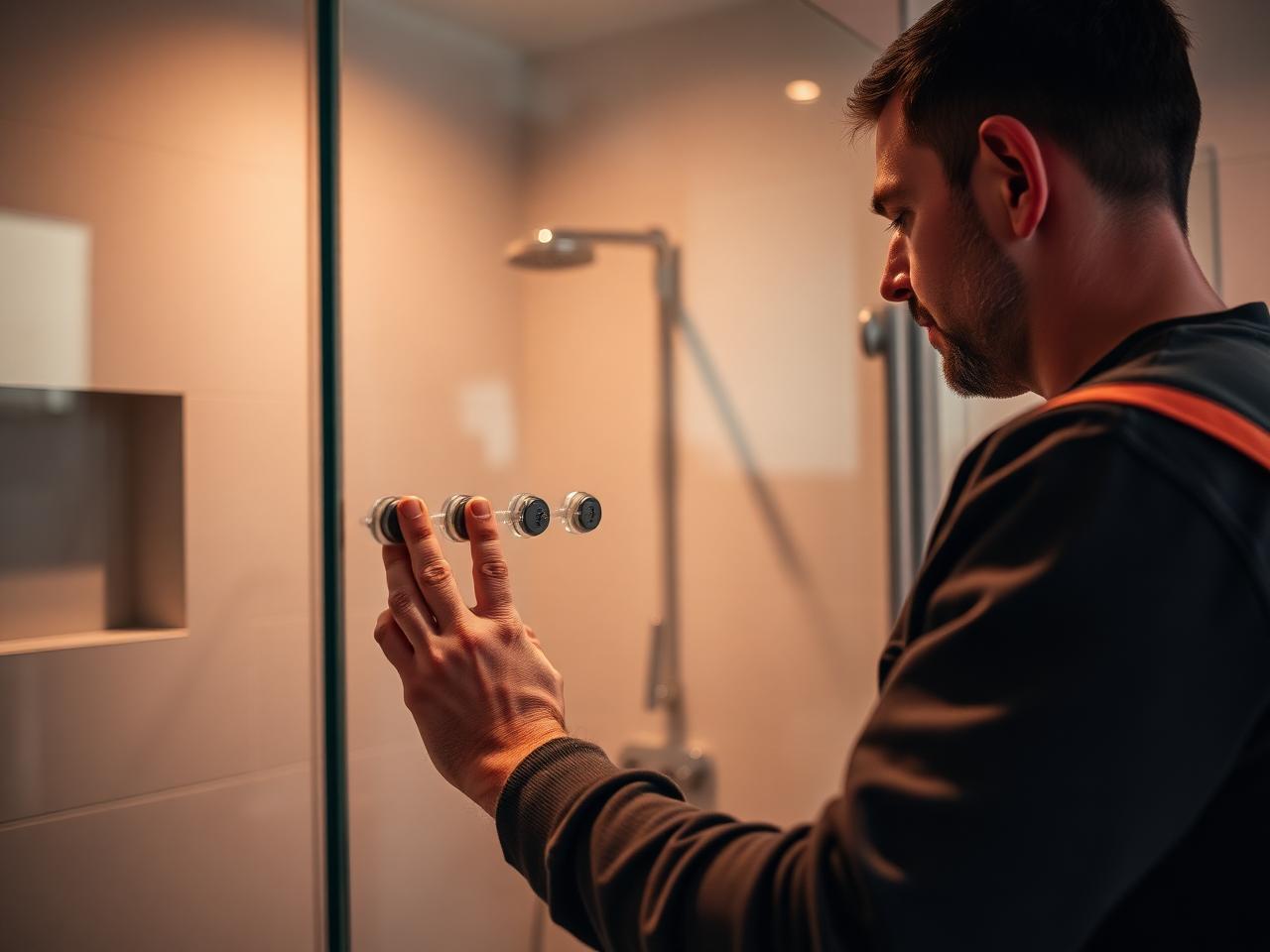
If a glass shower screen has cracked, dropped on its hinge or started leaking where it meets the tray in a Can Peguera home, first distinguish damaged glass from faulty hardware and seals. A cracked panel cannot be made safe with silicone, whereas a worn bottom seal may be repairable without replacing the screen. Barcelona City Council identifies Can Peguera within Nou Barris, but the neighbourhood does not reveal the model or dimensions in a particular bathroom. Before requesting a quotation, describe whether the screen slides or swings, where the fault appears and whether the panel seems stable without touching it.
Cracked glass, a misaligned door or a water leak
If you see a crack, chipped edge or loose fragments, do not test the door or try to remove the panel. Stop using the shower and keep other people clear. Where a door sticks without visible glass damage, observe the position of rollers, tracks, hinges and stops from outside, but do not force it closed. If water escapes, note whether it appears beneath the bottom seal, at the wall junction or between moving panels. A failed seal is not the same as defective glass, and a wall leak may not be cured by a new screen. General and close-up photographs from a safe position can help identify likely causes. Mention whether the problem followed cleaning, an impact or work on the shower tray without assuming the timing proves the cause. Spain's DB-SUA addresses impact safety and glass performance in shower enclosures. Any replacement should be checked against the intended use and fixing system rather than selected only for appearance. Do not stand inside the enclosure to inspect a visibly damaged pane.
Cuts, heavy panels and safe removal from a bathroom
Broken glass can cause serious cuts even when the pane looks stationary. Do not lift large shards by hand, remove a suspended leaf or lean against the screen. Keep children and pets out of the bathroom until the hazard is controlled. INSST occupational guidance for glaziers identifies risks from sharp edges, moving sheets and crushing injuries; handling must be planned with suitable equipment. Ask how the shower tray will be protected, how the old pane will be taken out and how waste will be managed. Bespoke glazing requires accurate measurements and hole positions before manufacture. If the leak originates at the tray-to-wall junction, an additional assessment of the substrate or waterproofing may be needed. Replacing the glass will not cure damp originating outside the enclosure. Consider the available space for moving a heavy panel through the bathroom and hall without striking fittings. A sensible inspection distinguishes immediate glass safety from a separate longer-term water-ingress problem.
Replacing a seal, hinge or complete safety-glass panel
A worn bottom sweep may be replaceable if a compatible part is available and the frame has retained its shape. A loose hinge needs assessment of the fixing and the glass before any tightening; pressure applied incorrectly to a panel can cause breakage. Where the glass is cracked, bonding the crack is not a safe structural repair. Identify the safety-glass type, thickness, finish, drilled holes, edge treatment and support arrangement. Toughened and laminated glass behave differently and should not be treated as interchangeable without checking the enclosure's requirements. If an older screen lacks compatible spare parts, replacing the whole assembly may be more sensible than adapting a panel with similar nominal dimensions. New glazing must match the frame, hardware and installation tolerances. The choice between repair and replacement should follow measurements and identified components, not just a logo on the handle or a catalogue image. Ask what can safely be reused and what will be tested after installation.
Itemised glazing quotation: panel, hardware and sealing
Request separate details for the visit and measurements, safety-glass specification, thickness, dimensions, edge finish, holes, profiles, hinges or rollers, seals, silicone and fitting. If repair is proposed, ask for spare-part references and why they are compatible with the existing screen. If the complete enclosure must be replaced, the quotation should include removal, waste disposal, transport, protection of surfaces and final movement and watertightness checks. Ask whether sealant requires curing before the shower can be used again, based on the actual product instructions rather than an invented universal waiting period. Compare a seal replacement with a complete panel only once the glass has been confirmed intact. Clarify exclusions such as tray repairs or damp behind the wall. A simple price per square metre does not capture drilling, weight, edge processing or fixing details. A useful scope explains the final checks, any remaining limitations and what happens if measurements reveal incompatible hardware. Avoid approving manufacture from an unverified rough measurement.
Explain whether your Can Peguera shower screen has cracked glass, misaligned hardware or leaking seals. Request measurements and an itemised repair-versus-replacement quote.
