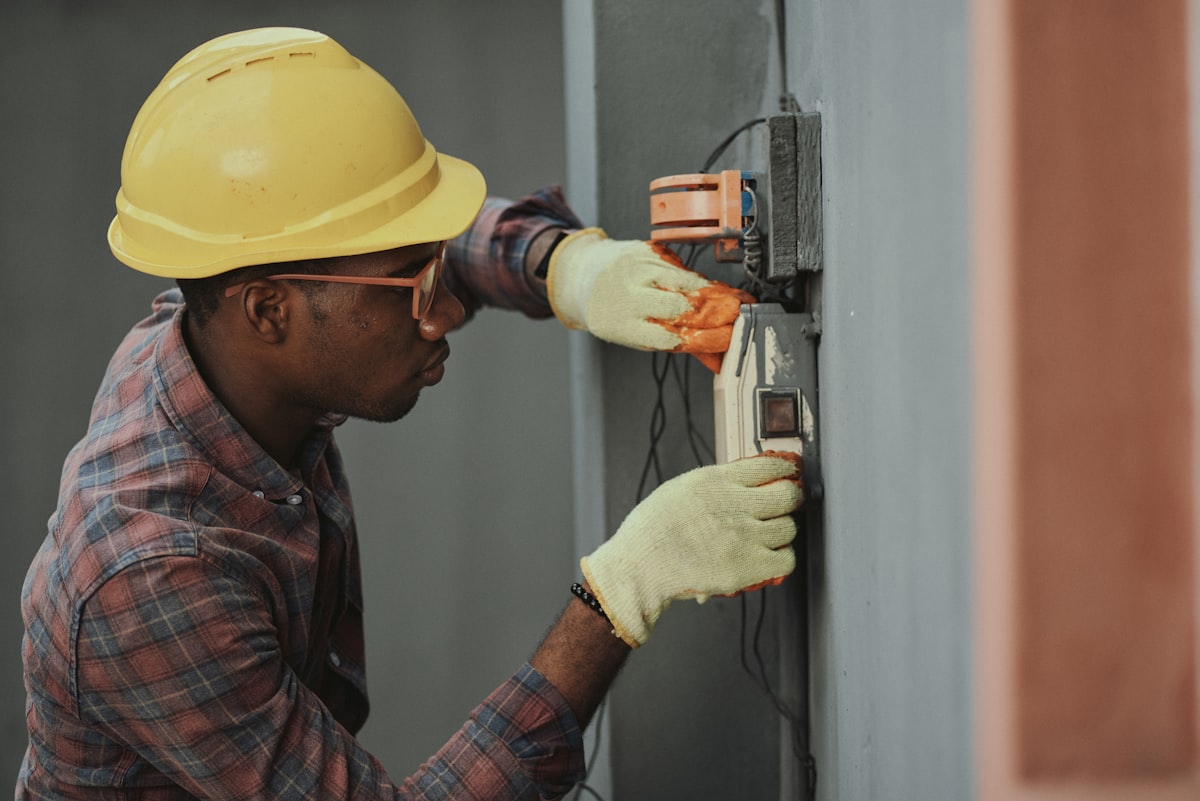
A socket that moves, crackles or no longer grips a plug needs more than a cosmetic faceplate change. This Can Peguera electrical guide, for Barcelona's Nou Barris district, explains how to prepare an enquiry without claiming that any particular property has defective wiring. The aim is to separate useful observations from assumptions and avoid unnecessary work.
What to observe without handling the installation
Distinguish a loose outer cover from a socket mechanism moving inside its wall box. If a plug slips out, there are dark marks, warmth or crackling, stop using that outlet. Do not insert tools or tighten screws yourself: a loose connection may require checking terminals, conductors and circuit protection. Note whether nearby sockets work and whether the symptom coincided with one appliance, but do not reconnect loads to reproduce it. If high-consumption equipment was plugged in, record its type and rated power without treating it as proof of the cause. Electrical installations can cause serious injury. Do not open sockets, light fittings or the consumer unit; never handle wiring or bypass RCDs and circuit breakers. Keep away from smoke, a burning smell, sparks, hot components, water near conductors or exposed cables, and seek appropriate assistance. Do not repeatedly reset a protective device that trips. The correct choice of cables and protective equipment depends on the installation and the Spanish low-voltage electrical regulations. Live testing and alterations belong with appropriately competent personnel. A photograph or a neighbourhood description cannot replace the necessary measurements.
Deciding what inspection is needed
An electrician needs to determine whether the fault is limited to the mechanism or also affects the box, wiring and terminations. A replacement that fits physically is not necessarily suitable: current rating, earthing and circuit condition matter. Ask what checks will confirm safe operation after repair. Where the outlet is communal or in rented premises, clarify who can authorise the work. One damaged socket does not, by itself, justify a claim that all wiring needs replacing.
Equipment details and access arrangements
Before requesting work, prepare the address and explain which room or area is affected, when the symptom began and whether it concerns one point or several. Say whether the equipment belongs to a home, business premises or a communal installation; that may determine who can authorise work. If access involves a meter cupboard, roof terrace or shared area, check with the responsible person first. The neighbourhood name cannot establish access restrictions, the age of wiring or a particular defect. Keep the manufacturer's reference if an appliance is involved, but do not dismantle it to obtain photographs. Pictures of covers, switches or labels are only useful when they can be taken without approaching damaged components.
Quotation, permission and checks
Ask for a written description of the proposed inspection and what the quotation includes: travel, fault finding, labour, parts, tests and any additional work. The Catalan Consumer Agency explains the information obligations applying to services in Catalonia. A remote estimate is not an electrical diagnosis. If someone proposes replacing a protective device, adding a circuit or changing the consumer unit, ask for the technical reasoning and any required documentation. Do not authorise extra work before understanding its scope. At handover, request a clear account of the confirmed fault, parts replaced and checks carried out; retain the invoice and relevant documents. If the cause was not established, it should remain an uncertainty rather than being described as fixed. This guide is not evidence of previous jobs or a guarantee of an appointment.
To request an electrical assessment in Can Peguera, describe the symptoms and access arrangements without handling the installation. An enquiry does not confirm availability, a price or an appointment.
