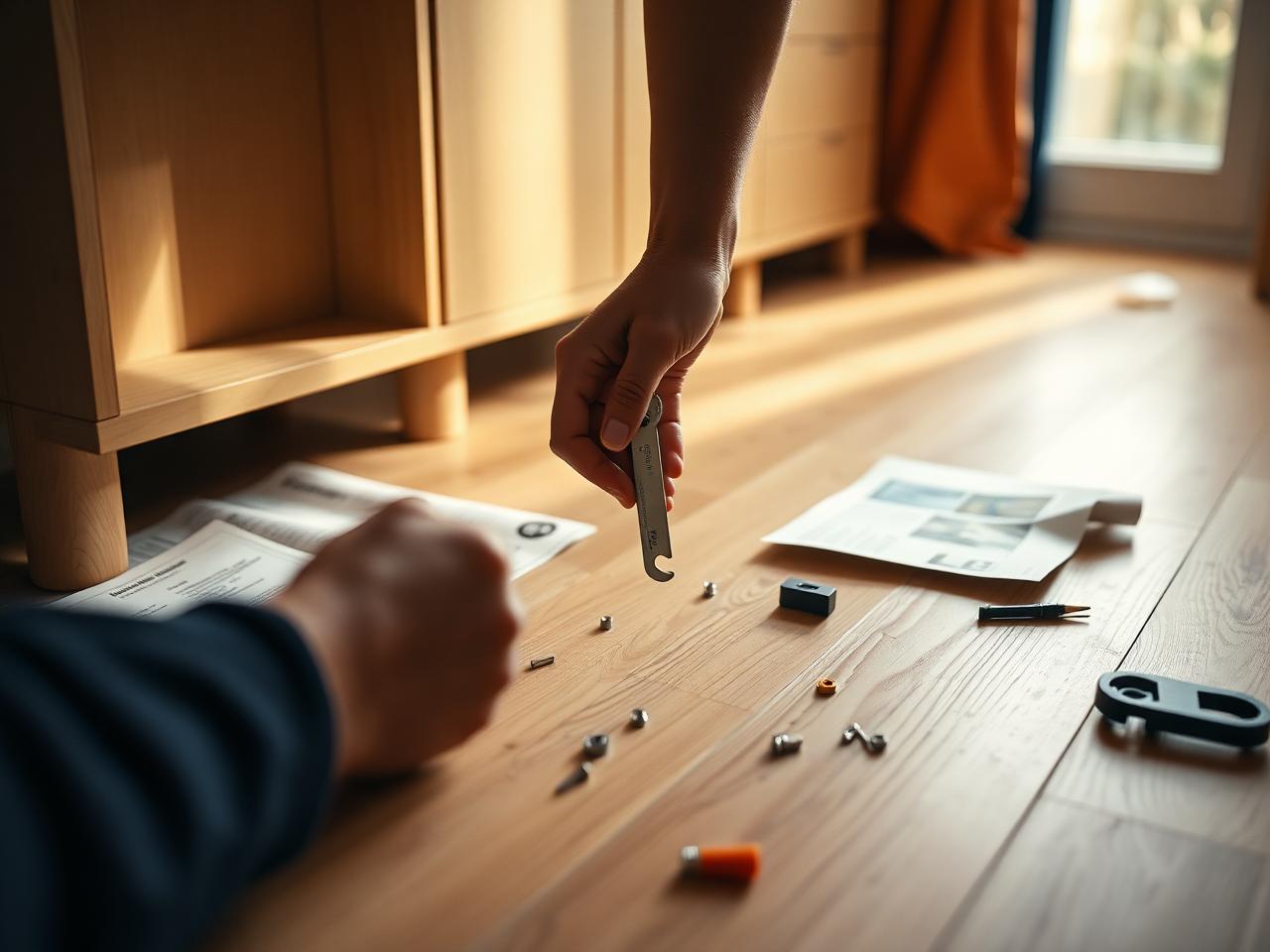
Assembling a tall modular wardrobe in a Can Peguera bedroom is not finished when the doors close. Alignment, stability, wall fixing and the ability to open drawers without tipping must also be checked. A multi-column unit may need different adjustments depending on the floor and wall construction. Can Peguera is an official neighbourhood in Barcelona's Nou Barris district, but that does not reveal whether a particular home has masonry or plasterboard partitions. For a useful quotation, provide the make, model, number of packages, dimensions and photographs showing the wall, skirting, sockets and any uneven flooring.
Check the components, floor and working space first
Before opening every package, compare panel references, fittings and the instruction manual with the manufacturer's inventory. A damaged side panel or missing screw should be recorded before it is hidden inside the assembly. Measure the available width, height and depth, door swing and working space without obstructing the room exit. An uneven floor may require the adjustment permitted by the system; forcing joints to compensate can damage boards and fittings. Ask whether the wall can accept the specified fixing and whether concealed services need locating before drilling. Do not use the wardrobe as a ladder or leave a tall column unsecured while assembling another. Spain's Technical Building Code, DB SUA, addresses certain use risks, including impacts and trapping, within its scope, but does not certify a particular item of furniture. Manufacturer instructions and assessment of the actual support are central to safe assembly. Preparing the space and inventory reduces avoidable damage and incomplete work.
Check door operation and stability before use
Keep other people away from unsecured tall panels and tools during assembly. Do not lean an unstable column against a door or load an unanchored wardrobe with heavy objects. Royal Decree 1627/1997 establishes preventive rules for construction work within its scope, although applicability depends on the actual intervention. At handover, check that doors open without rubbing, drawers travel correctly, modules align and fixings follow the manufacturer's instructions. Do not test stability by climbing on or forcefully pushing the wardrobe. Ask for loading limits and guidance on maintaining hinges and tracks. If the floor or wall prevents safe installation, that limitation should be recorded rather than describing the job as finished. Keep the manual, parts inventory, photographs of anchors and agreed scope. Protection against tipping matters more than a perfectly aligned decorative front. A careful handover also identifies anything still awaiting replacement parts.
Use anti-tip fixings suitable for the actual wall
The anti-tip system must suit both the furniture design and the wall material. A fixing intended for solid masonry may be unsuitable for a hollow partition or unsupported plasterboard. Before drilling, identify the backing and avoid concealed electrical cables or pipework. If the wall cannot accept the specified anchorage, do not improvise by simply choosing longer screws. Ask whether identifying the substrate, supplying compatible fixings and checking the result are included. Sliding doors need aligned tracks and stops; hinged doors require suitable adjustment of hinges and clearances. Drawers should move without binding or pulling the structure out of position. If interior lighting is proposed, distinguish furniture assembly from electrical alterations requiring another scope. A brand name is not a substitute for the manufacturer's loading, fixing and maintenance instructions. Furniture that looks upright can still be out of square, causing wear and unreliable operation.
Compare modules, doors, anchors and packaging as separate items
A written quotation should list the number and dimensions of modules, door types, drawers, accessories and whether the furniture arrives fully flat-packed. Separate checking parts, assembling frames, levelling, adjusting doors, installing anti-tip fixings, cleaning and removing cardboard or packaging. If skirting needs cutting or a trim must be adapted, request a separate item and prior approval. Clarify what happens when manufacturer fittings are missing or the wall cannot support the initially proposed anchor. A single price per wardrobe may conceal major differences in drawer and door work. Access, working space and model complexity affect the scope; the neighbourhood cannot establish a fixed price or prove that the same unit was previously assembled there. Ask what will be tested at handover and how product defects will be distinguished from assembly errors. Retaining the manual and part references helps resolve problems on evidence rather than assumptions.
Identify the wardrobe model in Can Peguera and request separate assembly, levelling and safe anchoring items.
