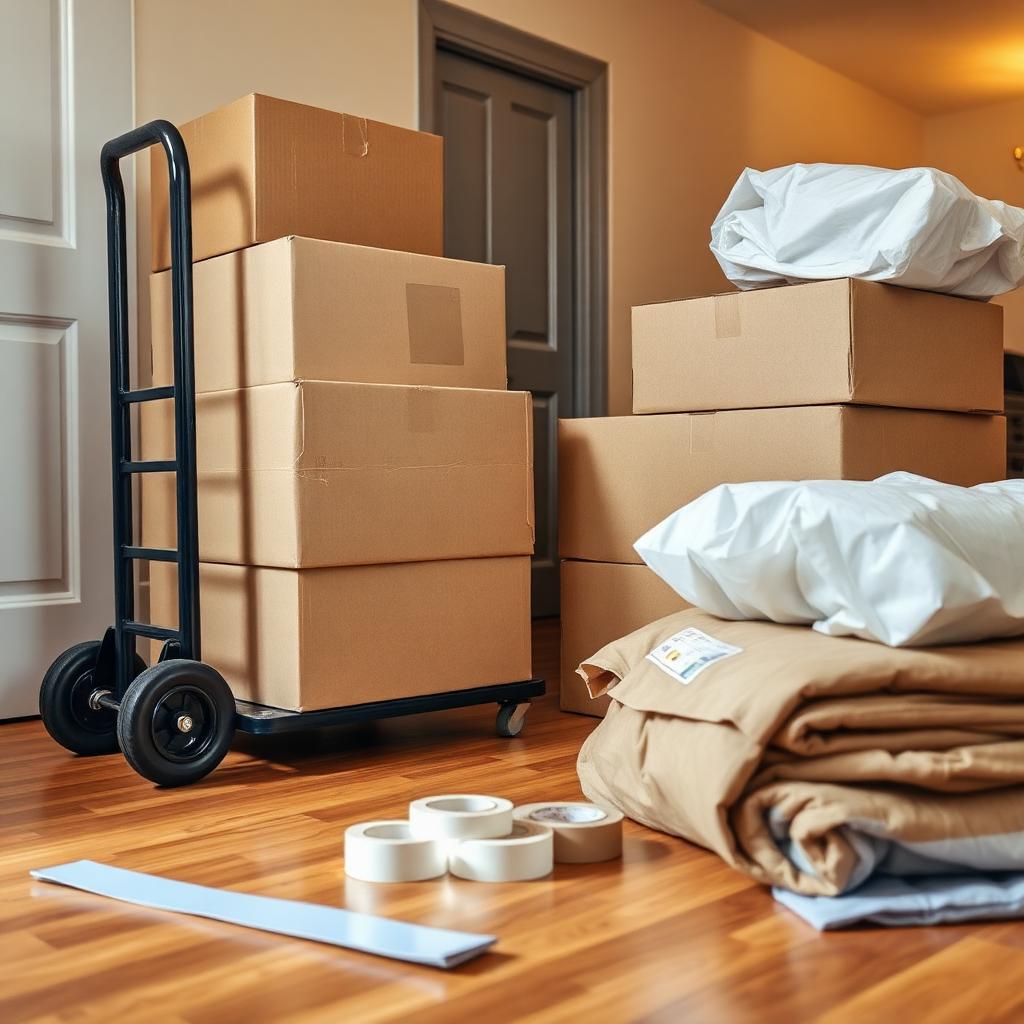
A move in el Camp d'en Grassot i Gràcia Nova needs more planning than a rough box count. A workstation, monitors, shelving, a flat-pack bed and domestic appliances each present different handling problems. The inventory should record dimensions, approximate weight, fragility and whether dismantling is feasible. Stairways, lifts and loading arrangements must be checked at the actual address rather than assumed from the neighbourhood name.
Plan the inventory, dismantling and loading route
Start by separating furniture that can travel assembled from items that need taking apart. For a home workstation, photograph connections, label cables and accessories, power down equipment according to the manufacturer's instructions and keep small fittings in named bags. A monitor needs packaging that prevents pressure on the display; a loose blanket is not necessarily adequate. Back up important files separately before moving a computer or storage device. Personal documents and valuables that the customer will carry should be explicitly excluded from the removal inventory. Inspect shelving and wardrobes before dismantling. Particleboard with worn fittings may lose rigidity when joints are undone and tightened again. Record which fasteners belong to each unit and keep assembly instructions where available. Pack glass shelves separately. Removing wall anchors and making good the holes are distinct tasks; they should not be silently included or excluded from a quotation. A built-in unit may require a separate trade assessment rather than ordinary furniture handling. Appliances require their own checklist. Check that water and electrical connections have been safely isolated by the appropriate person, remove loose components and follow manufacturer transport guidance. A washing machine may require transit bolts or another specified drum restraint. A general removals service should not be assumed to include work on gas connections or fixed services requiring a suitably qualified professional. Measure the route before lifting bulky items: door clearances, landings, stair turns and lift dimensions where a lift exists. If a sofa cannot turn safely, stop rather than forcing it against handrails or door frames. An external lifting platform cannot be promised simply because a window faces the street. Its feasibility depends on safe access, space, equipment and any relevant permissions. Photograph fragile items before packing and use an agreed inventory to check them at the destination. Loads should be arranged inside the vehicle so heavy items cannot crush lighter boxes or strike delicate furniture. Spain's National Institute for Safety and Health at Work provides guidance on manual handling risks, and Royal Decree 487/1997 sets preventive duties within its scope. Staffing and lifting aids should reflect the actual weights, travel distances and handling conditions. Assuming that two people can lift every object is not a risk assessment. Before agreeing a loading time, check whether public-road occupation or a reservation is needed. Barcelona City Council provides an administrative procedure associated with removals. The existence of that procedure does not mean every move requires the same authorisation, or that permission has already been granted. The quotation should clarify who checks the rules, applies where necessary, arranges signage and pays any applicable charges. At the destination, keep circulation routes clear, place boxes in their intended rooms and reassemble only the furniture included in the agreed scope. Do not reconnect equipment showing damaged plugs, cables or pipework. Checking the departure and arrival inventories together helps identify missing or damaged items while the circumstances are still clear.
When an item or access route needs an additional assessment
Request a closer assessment for a piano, large display cabinet, stone table, unusually heavy appliance, sensitive archive or fitted shelving. The same applies to narrow turns and uncertainty about whether a large item can pass through the building. Provide dimensions and photographs showing both the item and the full route. If fittings are loose, boards swollen or glass cracked, decide whether specialist protection, repair, alternative handling or exclusion is appropriate before lifting begins.
Protecting fragile surfaces and keeping components together
Small rigid boxes suit books and dense paperwork better than oversized cartons that become difficult to lift. Screens, mirrors and glass panels need suitable edge protection and secure separation. Mark dismantled pieces clearly and keep fixings with the correct furniture. No particular packaging brand guarantees a damage-free move. Protect floors and corners without creating trip hazards or blocking escape routes, and check any building-specific lift or common-area rules with the relevant manager.
An itemised quotation rather than a neighbourhood price
Ask for separate lines covering the inventory visit, packing materials, equipment preparation, dismantling, protection of common areas, crew, vehicle, loading, travel, unloading, reassembly and any required permits. Clarify whether storage, external lifting, disposal, specialist equipment or repairs are excluded. Price depends on actual volume, access, distance and the agreed services, not simply on the number of bedrooms or the name of the barrio. Check the stated damage cover, exclusions and procedure for reporting incidents. If a wardrobe unexpectedly cannot be moved assembled, any additional dismantling or equipment should be explained and authorised before the work proceeds. Two quotations are only comparable when they describe the same tasks and responsibilities.
