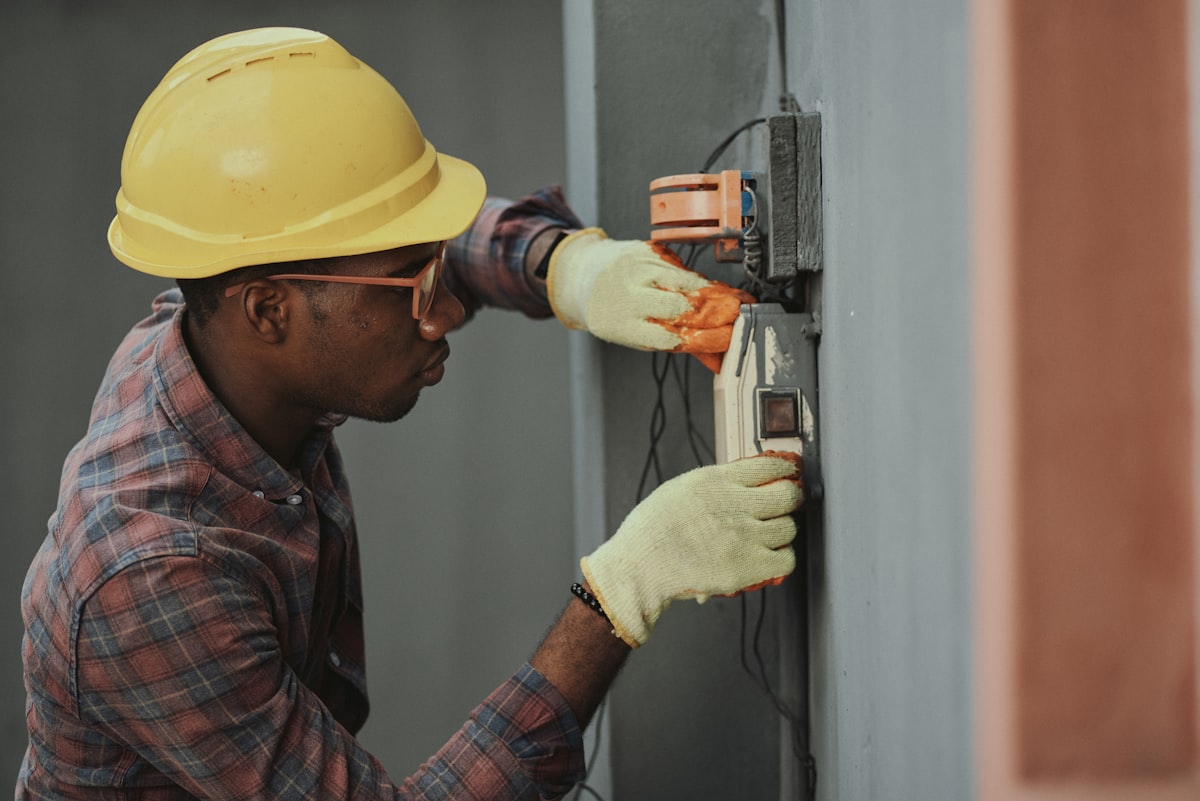
An unlabelled consumer unit makes it harder to explain which circuit has tripped and which area loses power. This guide for El Camp d'en Grassot i Gràcia Nova, in Barcelona's Gràcia district, helps prepare a circuit-identification enquiry without alleging defects in local buildings. The aim is to separate useful observations from assumptions and avoid unnecessary work.
What to observe without handling the installation
Explain whether labels are missing, no longer match the rooms or a protective device is tripping. Do not remove the consumer-unit cover or handle wiring to trace circuits. You can record wording visible from outside and describe which areas lost power during an unplanned interruption, but do not deliberately create outages as a test. A wrong label alone does not prove a protective-device fault; a readable label does not establish that a circuit is correctly installed. If there is heat, burning smell or sparks, keep clear and seek help. Distinguish a private consumer unit from equipment serving communal areas. Electrical installations can cause serious injury. Do not open sockets, light fittings or the consumer unit; never handle wiring or bypass RCDs and circuit breakers. Keep away from smoke, a burning smell, sparks, hot components, water near conductors or exposed cables, and seek appropriate assistance. Do not repeatedly reset a protective device that trips. The correct choice of cables and protective equipment depends on the installation and the Spanish low-voltage electrical regulations. Live testing and alterations belong with appropriately competent personnel. A photograph or a neighbourhood description cannot replace the necessary measurements.
Deciding what inspection is needed
Ask for circuit identification based on safe checks and a clear record linking circuits, protective devices and the areas supplied. If the layout differs from an existing schedule, ask what work and documentation would be needed before changing it. Do not alter breaker ratings to match a label. A circuit schedule helps future maintenance but cannot replace relevant electrical testing when an installation is modified. For rented or communal premises, confirm who may authorise the work.
Equipment details and access arrangements
Before requesting work, prepare the address and explain which room or area is affected, when the symptom began and whether it concerns one point or several. Say whether the equipment belongs to a home, business premises or a communal installation; that may determine who can authorise work. If access involves a meter cupboard, roof terrace or shared area, check with the responsible person first. The neighbourhood name cannot establish access restrictions, the age of wiring or a particular defect. Keep the manufacturer's reference if an appliance is involved, but do not dismantle it to obtain photographs. Pictures of covers, switches or labels are only useful when they can be taken without approaching damaged components.
Quotation, permission and checks
Ask for a written description of the proposed inspection and what the quotation includes: travel, fault finding, labour, parts, tests and any additional work. The Catalan Consumer Agency explains the information obligations applying to services in Catalonia. A remote estimate is not an electrical diagnosis. If someone proposes replacing a protective device, adding a circuit or changing the consumer unit, ask for the technical reasoning and any required documentation. Do not authorise extra work before understanding its scope. At handover, request a clear account of the confirmed fault, parts replaced and checks carried out; retain the invoice and relevant documents. If the cause was not established, it should remain an uncertainty rather than being described as fixed. This guide is not evidence of previous jobs or a guarantee of an appointment.
To request an electrical assessment in El Camp d'en Grassot i Gràcia Nova, describe the symptoms and access arrangements without handling the installation. An enquiry does not confirm availability, a price or an appointment.
