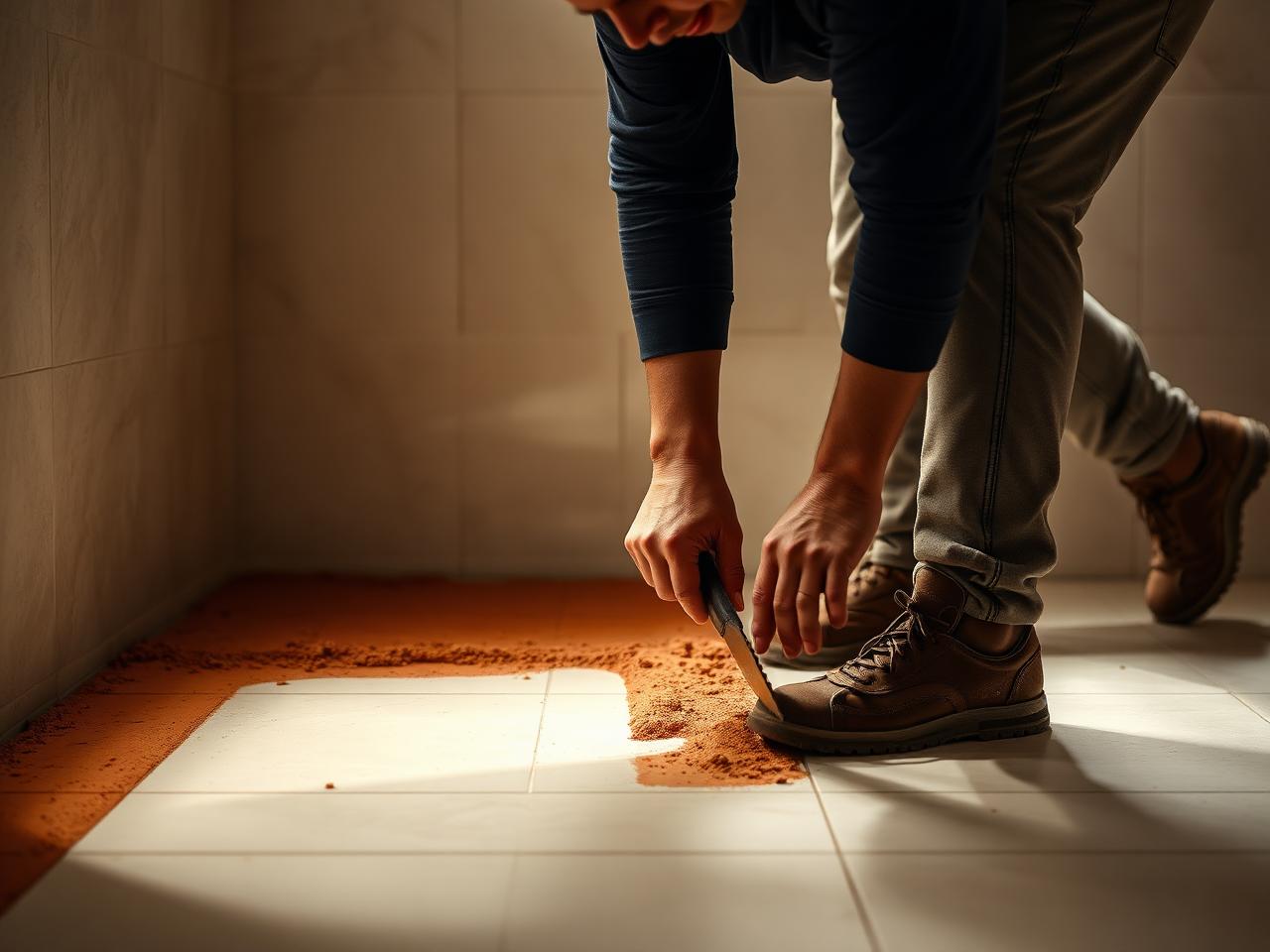
A hollow-sounding or loose bathroom tile in El Camp d'en Grassot i Gràcia Nova does not automatically prove that a pipe is leaking. The adhesive may have failed, the underlying surface may have moved, or water may be entering through damaged joints. Before requesting masonry work, establish whether the problem affects one tile, a whole section of wall or the floor as well. Barcelona's municipal directory places this neighbourhood in the Gràcia district, but that does not tell us how any particular flat was built. Take photographs of the shower area, grout lines and any staining on the other side of the wall. Do not pull off tiles that are still attached or strike a wall that may conceal services. If a tile could fall, keep people away and stop using the affected area. The purpose of the enquiry is to find the cause and define a safe repair, not simply cover a visible mark with new grout.
Separate poor adhesion from water ingress and movement
Describe whether a tile moves, whether grout has cracked and whether the seal between the shower tray and wall is open. Note if the surface stays damp after ventilation, but do not probe it with a hammer or scraper. A professional should assess the substrate and neighbouring tiles before deciding how much cladding must be removed. Water appearing in an adjoining room may also require checks of plumbing, waterproofing junctions and other possible sources. Spain's Building Technical Code has a health and hygiene document covering moisture protection; the requirements that apply depend on the building element and the scope of work. A damp patch is not, by itself, proof of a particular regulatory breach. For floor tiles, record unevenness, pieces that rock and cracks extending across several tiles. Significant deformation or cracks suggesting structural movement need an appropriately qualified assessment rather than cosmetic tiling alone. The useful sequence is to observe, define the affected area, establish the cause and then agree on materials and repair boundaries.
When to stop using the shower and broaden the checks
Stop using the shower if tiles could fall, water is actively entering another property or moisture is close to electrical equipment. Do not touch wet sockets or wiring. If a shared wall or a neighbouring flat may be affected, notify the relevant building representative. An old dry stain may call for a different response from an active leak. Record when swelling, persistent smells or bulging first appeared and whether they coincide with shower use. Applying sealant over the surface cannot guarantee that concealed moisture will disappear. The substrate and water entry path need attention before new tiles are installed. Where substantial cracks or movement suggest a structural concern, request a competent technical assessment. The structural safety documents of Spain's Building Technical Code are relevant professional references, not a remote diagnosis of the particular wall. Work should not be authorised beyond what the available inspection can justify.
Specify the substrate, adhesive and waterproofing scope
Ask whether only loose tiles will be removed or a wider area opened to inspect the backing. Tile format, substrate type, adhesive compatibility and moisture conditions influence the materials selected. An exact colour or size match for an old tile cannot be promised without checking available stock. Clarify whether the scope includes restoring waterproofing, repairing a damaged base, using suitable flexible joints and observing the manufacturer's curing times before the shower is used again. Fixing concealed pipework and replacing wall finishes are separate tasks even when they must be coordinated. If cutting tiles is necessary, agree on dust containment, protection of furnishings and removal of debris. After completion, request checks of grout, edges, surface alignment and any agreed water-related tests. Photographs of the exposed backing before it is covered can help document what was actually repaired. Avoid accepting a broad watertightness guarantee without knowing exactly what was opened and tested.
Request an itemised masonry quotation
The final cost depends on how many tiles need removal, the condition of the backing, access, available materials and whether another trade is needed. There is no verified standard charge for shower tiling in El Camp d'en Grassot i Gràcia Nova. Ask for separate items covering protection of the home, removal, debris handling, inspection of the substrate, waterproofing where required, adhesive, replacement tiles, grout, sealant, cleaning and final checks. If the extent of damage is not yet visible, separate exploratory opening from the definitive repair and agree how any additional work will be approved. The Catalan Consumer Agency explains rights concerning quotations, invoices and additional charges for home services. Keep before-and-after photographs and request drying guidance based on the actual products rather than an invented universal completion time. Availability and the final scope must be confirmed for the individual property; supposed previous jobs in the neighbourhood are not evidence.
For loose bathroom tiles or moisture in El Camp d'en Grassot i Gràcia Nova, share photographs, say when water appears and request an assessment of the substrate with an itemised quotation.
