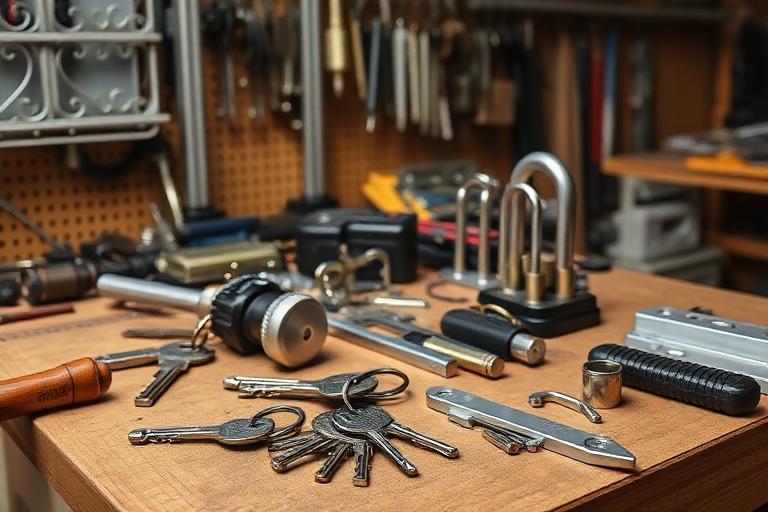
For locksmith work in El Besòs i el Maresme, explain whether keys are lost, the door has closed with keys inside, the cylinder turns without releasing the latch, or the mechanism binds. These are different faults and do not automatically justify drilling or replacing a lock. Say what type of door is involved, whether it is merely latched or deadlocked, and whether it serves a home, business or shared entrance. If somebody is in immediate danger, use emergency services. Never force a fire door or alter a communal access system without authority. A neighbourhood name cannot establish the security rating, frame condition or exact lock type of a particular building. This guide is for planning authorised work and comparing options, not a claim of completed jobs or guaranteed availability.
Cylinder, escutcheon and door frame
Replacing a cylinder alone does not guarantee the security of the whole entrance. Compatibility with the lockcase, cylinder length, protective escutcheon, strike plate, hinges and frame all matter. Ask whether the replacement projects beyond its protection and whether the door closes correctly. Do not choose only by the number of supplied keys or a marketing label. Official Mossos guidance discusses secure locks, controlled key duplication and protecting entrances. A distorted frame or misaligned strike plate can make a new cylinder difficult to operate. If closing requires force, ask for checks on alignment, hinges and clearances before buying expensive parts. Any intervention must preserve safe escape from the property and must not compromise a fire-resisting door or shared access arrangements.
Lost keys and legitimate access
A property should only be opened at the request of someone entitled to enter. Have documents ready to establish your connection to the premises; the locksmith should check authorisation before acting. If lost keys were accompanied by information identifying the address, consider changing the cylinder even if a spare key remains. Catalonia's Mossos d'Esquadra advise changing locks when keys are lost and not hiding keys outside. If you suspect a break-in or find signs of forced entry, avoid disturbing evidence and contact the police. A door that has simply latched may call for a different solution from one locked with several turns. Ask which approach is proposed, what damage it might cause and what would need replacing before authorising destructive entry. Do not attempt unauthorised entry techniques.
Communal doors and access control
The problem may concern a private flat, a shop or a shared entrance, and an address in El Besòs i el Maresme does not establish who may authorise a change. For a building entrance, coordinate with management and preserve residents' access and applicable escape requirements. A door closer, entry-phone system and mechanical cylinder have different functions; a door that fails to shut by itself may need adjustment rather than a new lock. Where electronic access is fitted, ask how existing credentials will be retained, replaced or revoked and who controls new permissions. Keys and codes must not be handed to unauthorised people. If damage suggests attempted forced entry, record what you see without disturbing potential evidence. Avoid improvised modifications to common doors.
Clear pricing before any damage
Request an itemised quotation covering any call-out charge, assessment, opening method, possible door damage, replacement lock or cylinder, labour, taxes and keys supplied. A vague verbal price can change substantially after dismantling. If destructive opening is proposed, ask why and what it will cost to leave the door fully functional. Request the make and reference of the replacement, details of key-copy control and confirmation of compatibility. Before accepting the work, test opening and closing from both sides and confirm safe exit. Keep the invoice, warranty and instructions. Tenants should coordinate with the landlord where appropriate. This guidance does not set fixed prices or certify a company's presence in the area. Urgency does not remove the need to verify identity and authority to enter.
Describe the door, what happens when turning the key, who authorises access and whether a communal entrance is involved. Ask for options before accepting damage.
