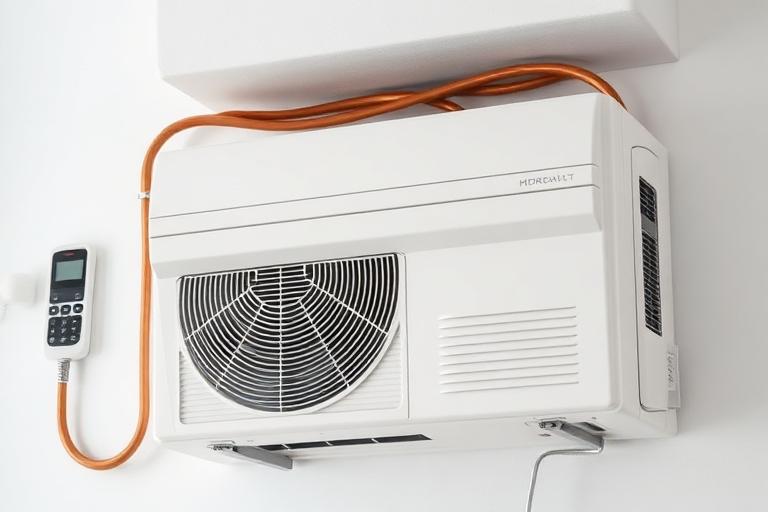
A musty smell when an air-conditioning unit starts in an El Camp d'en Grassot i Gràcia Nova home does not, on its own, indicate a refrigerant fault. Filters, the condensate tray, drainage, accumulated dirt or moisture elsewhere in the room may be involved. Before ordering cleaning or replacement parts, describe when the smell appears and whether water is visible. This page explains how to request air-conditioning maintenance in this Gràcia neighbourhood of Barcelona without inventing a diagnosis for a particular home or promising permanent odour removal.
Distinguish a unit odour from room moisture
Record whether the smell appears only at start-up, continues while the fan runs or is present even when the unit is off. From a safe position, look for staining near the indoor unit and note whether airflow seems normal, without opening covers or touching wiring. If the same smell occurs elsewhere in the room, another moisture source may need investigation. A dirty filter and a condensate tray holding water are different conditions. A stale smell does not establish refrigerant leakage. Mention whether the symptom began after a long period without use or after a recent clean. Do not spray perfume or improvised cleaning chemicals into the appliance to mask the smell.
Stop use when water or electrical warning signs appear
Water dripping onto sockets, smoke, a burning smell or abnormal overheating calls for stopping use and seeking appropriate assistance. In immediate danger, contact emergency services. A mild stale odour is not the same as an active water leak or an electrical hazard. Do not open the refrigerant circuit or mix concentrated cleaning products to treat internal components. Spraying liquids near electrical connections may create further danger. Where occupants are sensitive to indoor air quality, consider limiting use until the source is assessed. Wiping a visible surface is not a substitute for checking a blocked drain when water is collecting. Avoid any cleaning method that conflicts with the manufacturer's instructions.
What a technical cleaning assessment may involve
Depending on the design, inspection may include accessible filters, the heat exchanger, condensate tray, drain and fan operation, following the manufacturer's guidance. Not every model can be dismantled in the same way, and not every cleaning product suits the internal materials. Ask how electrical connections will be protected and what checks will confirm that condensate drains correctly. A blocked drain requires a different intervention from a loaded filter; moisture coming from a wall needs separate investigation. Spain's Regulation on Thermal Installations in Buildings addresses maintenance and hygiene within its scope. No cleaning treatment can responsibly guarantee that every future odour will disappear without establishing its cause.
Separate cleaning, drainage and fault diagnosis in the estimate
Request written terms showing inspection, filter cleaning, access to the condensate tray and drain, products, labour, possible parts, protection of furnishings, final checks and tax. Routine cleaning is not equivalent to dismantling a unit to clear an obstruction or repair a water leak. Ask whether the estimate includes finding the cause or only an initial clean, and how additional work will be authorised. The Catalan Consumer Agency advises identifying the provider, obtaining an estimate and keeping payment records. There is no universal price, guaranteed arrival time or assured permanent result without inspection. Keep the invoice and request model-specific maintenance guidance rather than generic instructions that may conflict with the manufacturer.
Describe when the odour appears and request a written air-conditioning maintenance estimate for El Camp d'en Grassot i Gràcia Nova.
