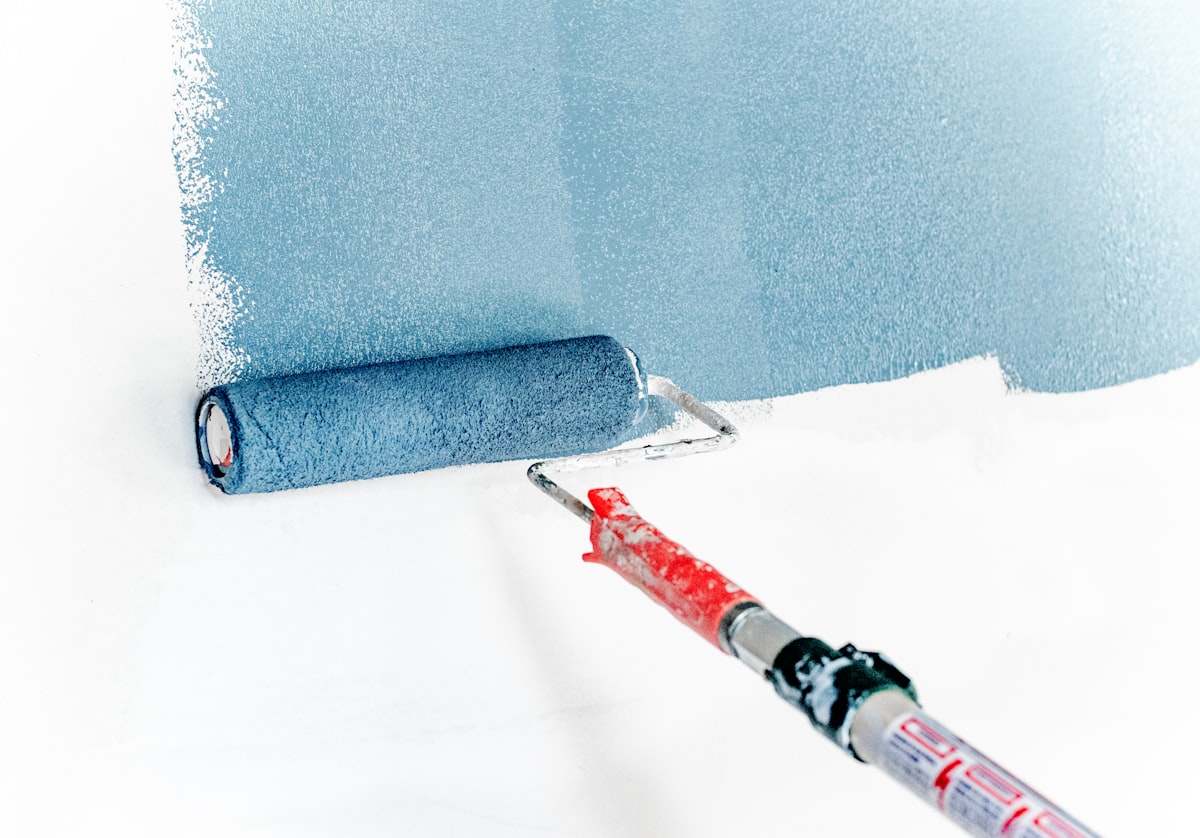
Painting a home in El Clot involves more than choosing a colour. The finish depends on the substrate, cleaning, previous repairs and the cause of any stains. Before requesting a quote, explain whether the work concerns internal walls, ceilings, joinery or exterior surfaces and identify peeling, cracks, powdery paint or damp marks. Take a photograph of the whole wall and a close-up of the damage. Do not hide a recurring stain beneath more coats without investigating why it returns. A responsible proposal distinguishes surface preparation, priming, repair and final painting. The substrate cannot be identified simply from the neighbourhood or a living-room photograph.
Assessment and process
Begin by checking adhesion, absorption, cleanliness and the condition of earlier paint layers. Peeling paint may need local removal, while a deteriorated substrate calls for a different approach. Distinguish active movement from superficial hairline marks before filling cracks. For stained ceilings, check whether a leak or condensation remains. Spain's Building Technical Code DB-HS addresses health and moisture protection where applicable. Choose primer for compatibility with the prepared surface rather than habit. Ask for a colour sample and inspect demanding surfaces under the room's actual lighting. Good preparation matters more than promising an arbitrary number of coats.
When to investigate further
Recurring mould, blistering, extensive peeling or stains that worsen after rain justify investigating the cause before decorating. Tenants should record damage and clarify responsibilities rather than concealing a serious defect. Work on façades, shared courtyards or protected features may require community and municipal authorisation. For occupied bedrooms, agree ventilation, protection of belongings and re-entry conditions appropriate to the chosen product. The finished colour depends on lighting, base colour and coat build-up; a sample reduces the risk of unrealistic expectations.
Materials and precautions
Washable, breathable, low-emission and bathroom-specific paints have different uses. A marketing label does not replace a product data sheet. Where moisture remains active, no coating cures the underlying water problem. Matt finishes may disguise some visible unevenness, whereas satin finishes can make it more obvious under grazing light. Check compatibility between filler, primer and topcoat and follow the manufacturer's drying intervals. Ventilate as directed and protect floors, sockets and furniture. Do not sand unknown old coatings without considering dust exposure and the materials present.
Scope of the estimate
Request a written estimate separating protection, moving furniture, scraping, crack repair, substrate treatment, primer, specified coats, paint product and cleaning. Ask for measured areas, exclusions and whether ceilings or doors are included. Clarify whether the cost addresses the cause of damp or only redecorates once that cause has been corrected. Any extra work discovered beneath the paint should be agreed before it proceeds. The Catalan Consumer Agency explains written estimates for home services. No invented square-metre rate, drying guarantee or immediate availability is advertised for El Clot.
For a painting assessment in El Clot, state the rooms, approximate surfaces, desired colours, condition of the walls and outstanding repairs. Share wider photographs and well-lit details of damage. Explain whether furniture will remain and when the home can be ventilated. Ask for a specification of products, preparation, coats and finish acceptance criteria. If damp is present, keep investigation of the source separate from decorative painting. Retain colour references and product information for future touch-ups.
