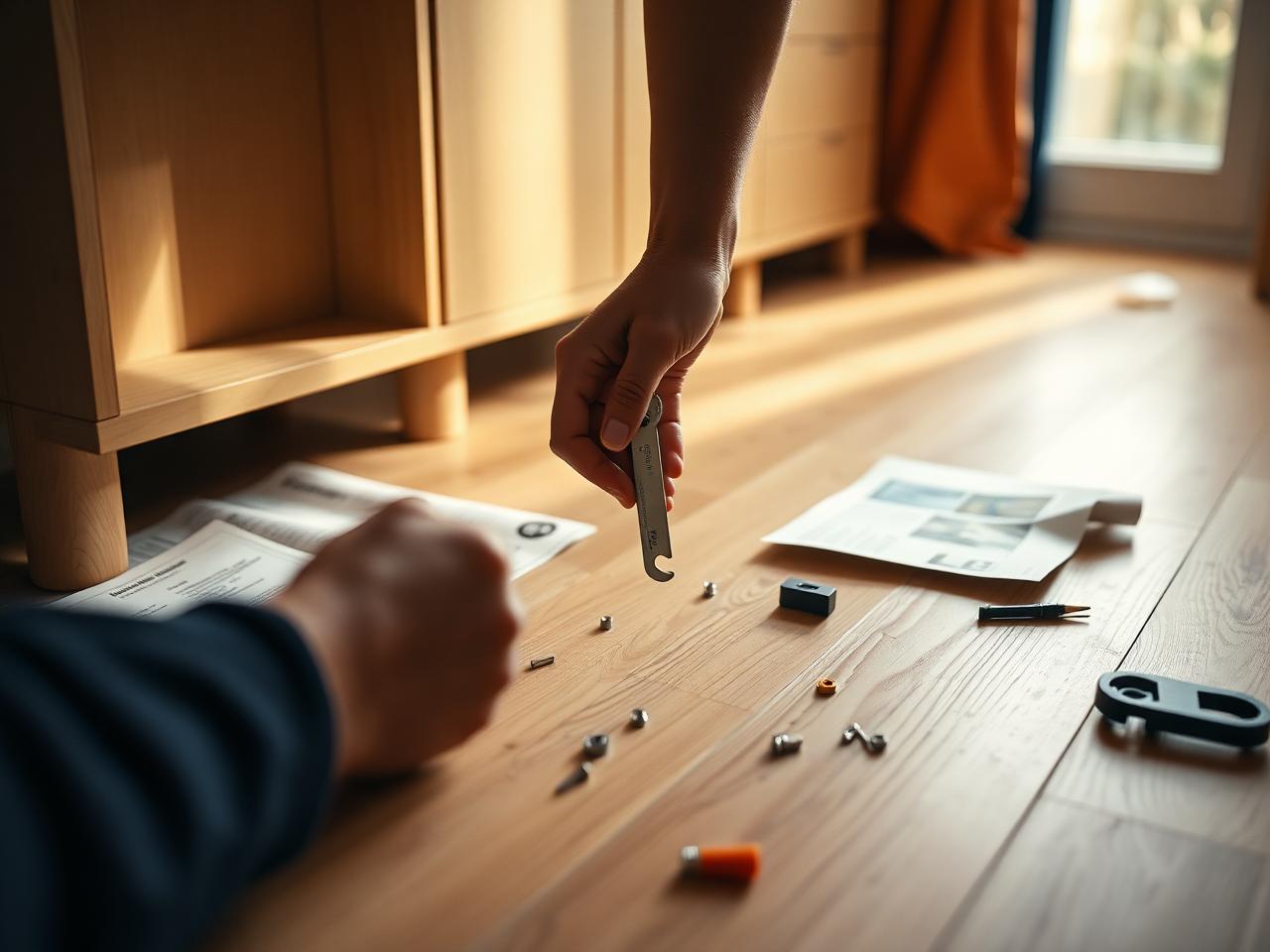
Furniture assembly in El Poblenou, a neighbourhood in Barcelona's Sant Martí district, for anyone fitting a tall wardrobe, levelling kitchen units or securing shelves. The neighbourhood does not tell us what walls, lifts or room dimensions a particular home has. The main challenge is not always joining the panels: a correctly assembled unit can remain unsafe because of an uneven floor, unsuitable fixings or poorly distributed weight. This guide explains what to check before requesting a quotation, which decisions matter during assembly and what records to keep. An enquiry does not guarantee an appointment, price or availability.
Inventory, instructions and missing parts
Prepare a list for each item showing the make, model, dimensions, number of packages and final position. If you have the instructions, provide the exact reference and check that the original fittings are present. Do not replace screws of unknown length with random alternatives. Keep small hardware separate from packaging and photograph damaged panels before assembly. If a structural part is missing, stop and obtain the correct replacement rather than improvising a support. A chest of drawers, folding bed and modular wardrobe need different checks. For sliding doors, identify the guides and stops; for kitchen units, mention nearby water, gas or electrical connections. Assembling cabinets does not authorise alterations to technical installations.
Wall fixings: identify the substrate and load
Before drilling, identify the actual wall: masonry, concrete, plasterboard or another construction. Paint alone does not reveal the substrate or the location of hidden cables and pipes. Fixings must suit both the wall and expected loads; the plug supplied in a furniture pack may not be appropriate. Tall units and shelving may require anti-tip anchors under the manufacturer's instructions. If the wall is uncertain or substantial loads are involved, seek a competent assessment before drilling. Explain what the furniture will hold and whether children or other people might lean on it. Do not use an unstable wardrobe while waiting for a permanent solution.
Levelling, doors and building access
Check the dimensions of packages, landings, stairs and lift before assuming everything will pass through the main entrance. In El Poblenou, as elsewhere, each building has its own access conditions that must be checked. Confirm who can authorise use of communal areas and whether there are building rules or permitted times. During assembly, levelling should be checked before adjusting hinges, drawers and doors: if the cabinet is out of square, tweaking the fittings may only hide the problem temporarily. Test the full travel and stops of sliding wardrobe doors and the stability of an extending table in every position. Keep exits and shared routes clear while work is under way.
Task-based quotation and handover checks
Ask for a written quotation specifying which items will be assembled, the number of modules and whether anchoring, packaging removal, levelling and final adjustments are included. Clarify what happens if parts are missing, the wall is unsuitable or the item needs moving to another room. The Catalan Consumer Agency says additional items increasing the agreed cost must be communicated so the customer can accept or reject the change. Before handover, check that drawers move smoothly, doors close, moving parts have their stops and the unit does not rock. Request use instructions and load limits where relevant. Keep the manual, invoice, fixing details and photographs of any outstanding issue.
For a furniture assembly assessment in El Poblenou, provide models, packages, measurements and safe photographs of the location. The form does not book a visit.
