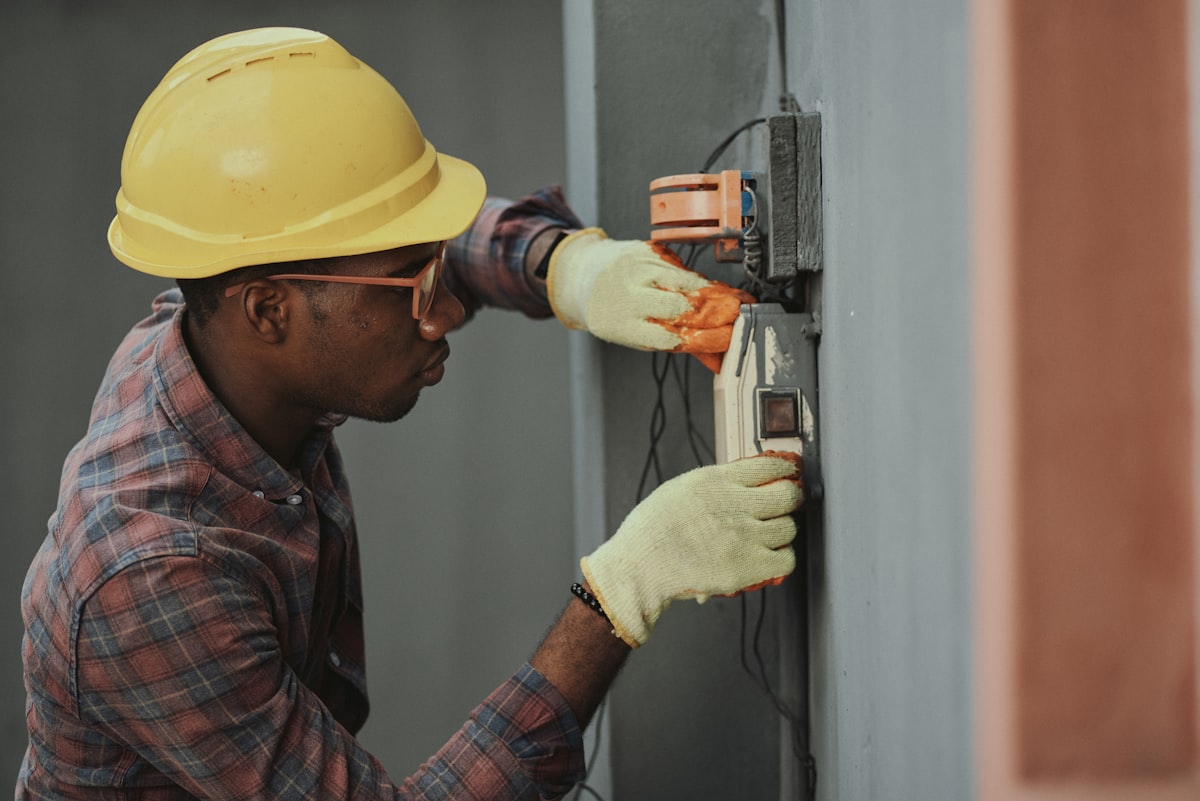
If switching on an oven trips a protective device in a La Font d'en Fargues home, fitting a higher-rated circuit breaker to stop it tripping is not a safe shortcut. The cause may lie in the appliance, a connection, the circuit's simultaneous load or an earth-leakage fault. It also matters whether the residual-current device or a particular circuit breaker operates. The neighbourhood identifies the location of the request but says nothing about the installation's capacity or condition. Stop using the equipment that triggers the fault and arrange an appropriate electrical assessment.
Identify the device that trips without opening the board
Note whether power cuts out when the oven is plugged in, when a heating function starts or after several minutes. From a safe position, without removing covers, observe which switch has moved and which other appliances have lost power. A residual-current device and a miniature circuit breaker serve different purposes: depending on the installation, one may respond to leakage current while the other responds to overload or short circuit. Their presence in the same consumer unit does not establish the cause. If there is a burning smell, sparking, unusual heat or nearby water, do not re-energise the oven to repeat the test. An appropriately authorised electrician should choose the measurements and distinguish a fixed-wiring problem from an appliance fault. Never bypass a protective device or handle conductors even when a switch appears off.
Repeated trips or overheating require stopping use
Do not repeatedly reset a protective device to keep cooking when it continues to trip. Stop using the affected equipment and seek a qualified assessment. If the consumer unit smells burnt, a socket is hot, dark marks appear or there are sparks, keep away and obtain appropriate assistance. Never touch a wet consumer unit or attempt to dry live wiring. If several homes lose power, check with the building manager or distribution company before assuming the oven caused the wider outage. A La Font d'en Fargues address cannot reveal the age or capacity of a consumer unit. Describe the appliance function in use, the device that tripped and any recent installation work.
Breaker rating must suit the actual circuit
The protective device must be selected for the wiring, circuit characteristics and applicable requirements, not simply to prevent nuisance trips. Increasing the rating without technical justification may leave a cable inadequately protected. If the defect is inside the oven, record its make, model and symptoms to determine whether an appliance repair service is needed. Spain's Low Voltage Electrotechnical Regulation, approved by Royal Decree 842/2002, establishes safety conditions for installations within its scope; it cannot diagnose a particular oven remotely. Ask what tests and documentation apply to the proposed work and whether any modification requires updated installation records. The electrician should specify compatible materials and the actual scope before starting.
Quote for diagnosis before component replacement
Request a written estimate distinguishing call-out and testing, labour, compatible materials, any circuit work, tax and technical documentation where applicable. Investigating leakage in an appliance and upgrading a fixed supply circuit are different tasks. Ask which finding would justify changing a protective device and whether the oven manufacturer should handle the appliance repair. Do not accept a larger breaker as a solution without proper technical evidence. The Catalan Consumer Agency recommends written quotations and agreement before additional costs are incurred. At handover, request an explanation of the checks, an invoice and any documents required for the actual intervention. Testing must be carried out by competent personnel without defeating safety protection. No fixed price or guaranteed attendance time is offered before the fault is established.
Explain which protective device trips and when, then request a written electrical assessment for La Font d'en Fargues.
