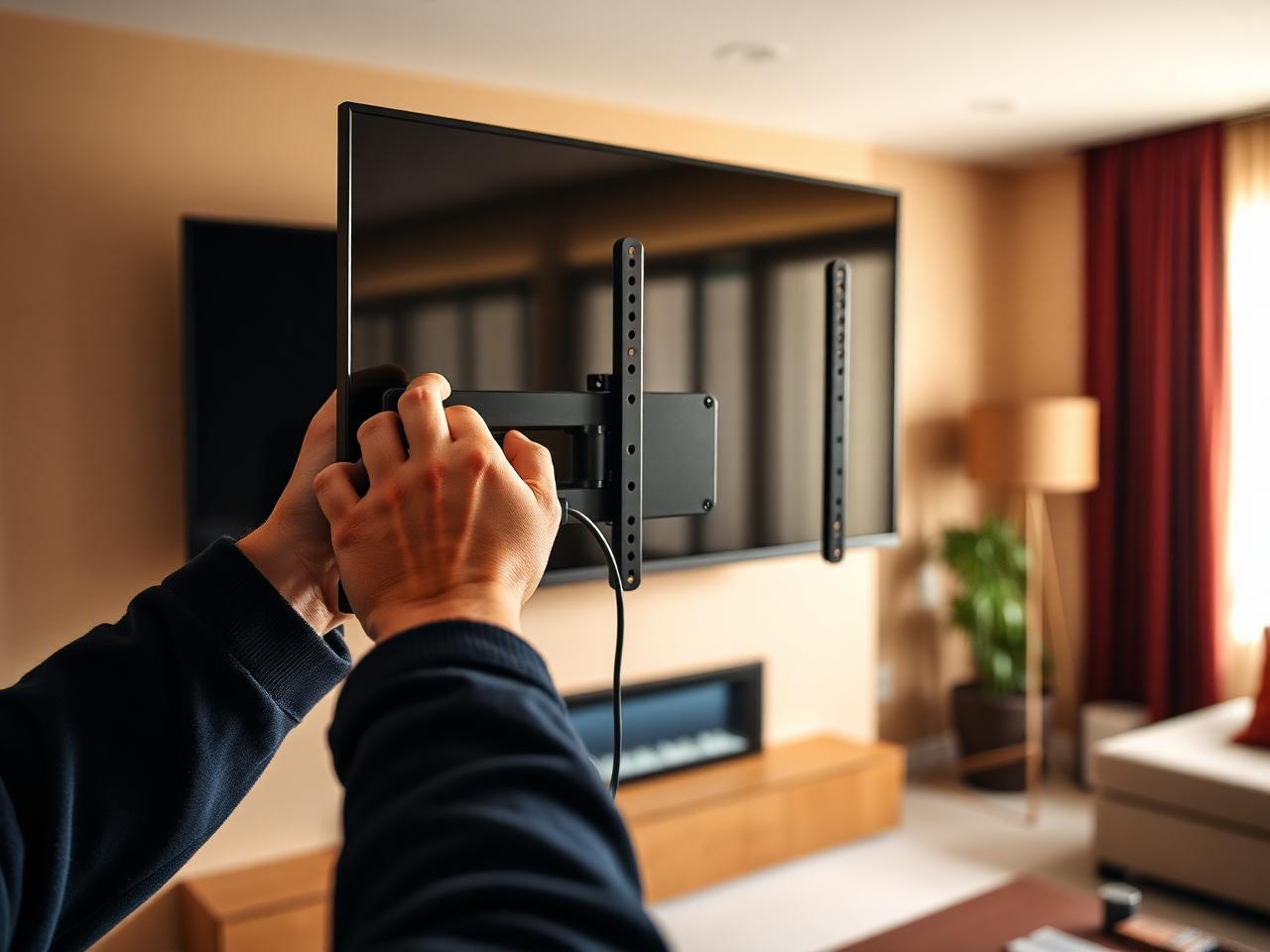
Mounting a large television on a wall in el Baix Guinardó involves more than choosing a bracket advertised for the same screen size. The real weight of the television, its mounting-hole pattern, the condition of the wall and the route for cables all matter. A plasterboard partition with framing behind it cannot be treated as if it were solid masonry. A swinging arm also places different demands on fixings from a flat bracket because the screen's weight acts farther from the wall. Before arranging TV installation or connected-home equipment, identify what is known about the wall and decide how cables can remain accessible without drilling blindly into hidden building services.
Match the bracket to the television and the actual wall structure
The television manufacturer's information should state the weight without its stand, the VESA mounting pattern and any ventilation clearance. The bracket documentation sets out compatible mounting patterns, weight limits and installation requirements. Matching those specifications is necessary but does not prove that the wall is strong enough. If the surface is plasterboard, the installer needs to identify the supporting structure and assess a fixing system suitable for the whole load. A wall plug advertised with a high load rating does not automatically make a long articulated arm safe; the overturning forces change as the screen extends away from the wall. Older finishes may conceal cavities, patched areas or a weaker backing material. Tapping the wall and judging the sound is not a substitute for checking the actual construction. The assessment should consider existing cracks, damaged substrate, the distance to edges and where the bracket load will be transferred. When the wall is unsuitable, the safe choice may be a different bracket, approved reinforcement or another installation position. Do not drill exploratory holes or rely on a handheld detector as conclusive proof that there are no electrical cables or pipes. The fixing method should be justified against the bracket instructions and the real substrate.
Protect against falling equipment and unsafe electrical work
A television falling from the wall can seriously injure people, especially where a bracket extends above a walkway, desk or seating area. Loose finishes, damp damage and visible cracks should be assessed before loading the wall. Choose the height with doors, windows, furniture and routes through the room in mind. Spain's CTE DB-SUA considers general safety in use and DB-SE covers structural principles, but neither document certifies an individual home installation remotely. Adding sockets, moving electrical circuits or opening a distribution system is work for competent personnel, appropriately authorised where required. Ordinary power leads should not simply be buried in an unknown wall cavity without checking the applicable electrical method and materials. Leave adequate air movement around the screen and make sure the articulated arm cannot pinch a lead when moved. If an outlet sparks, smells burnt or shows water damage, disconnect use safely and arrange an electrical assessment. Television mounting must also avoid concealed building services and should not interfere with shared building elements without appropriate arrangements.
Fixed and articulated brackets, signal cables and accessories
A flat bracket normally holds the television nearer the wall. An articulated arm may allow a better viewing angle, but increases the importance of the wall fixings and clearances. Check the manufacturer's movement limits, weight rating, adjustment range and access to the screen's ports. Bolts, spacers and washers must suit the television's mounting inserts: a screw that is too long can damage the back of the device. For HDMI, network and power, a planned surface cable channel may allow future replacement without unnecessary wall openings. A concealed cable route requires separate checks on where the cables run and which installation rules apply. Soundbars, streaming boxes and smart devices may need extra sockets or signal connections and should not be assumed compatible without the models being identified. The completed cables need a little movement allowance at a swinging arm but must not hang where they can be caught. Keep ventilation clear and avoid positioning power supplies where they will be crushed behind a bracket.
Separate wall checks, bracket fitting and cable work in the quote
Ask for an itemised quotation covering site assessment, wall substrate checks, bracket and accessories, any justified specialist fixings or reinforcement, cable channel, connections, screen alignment and a final safety check. Fitting a compact television to a suitable solid wall differs from suspending a large screen on a long arm from a partition that needs extra structure. Any new socket or concealed electrical route must be defined as separate work and authorised before it starts. The Catalan Consumer Agency provides guidance on quotations and contractual terms for services at home. There is no reliable price based solely on the television's diagonal size in el Baix Guinardó; actual load, access, wall construction and accessories change the scope. Completion should include checks of stability using the bracket manufacturer's method, level, range of movement, cable strain and access to connectors. Keep the mounting instructions and invoice for a later television replacement or reconfiguration.
For TV mounting or connected-home assistance in el Baix Guinardó, provide the television model, weight if known, preferred fixed or articulated bracket, and any information about the wall. Wide photographs of the proposed location and existing sockets help define the enquiry. The priority is to establish a safe structural and electrical approach before agreeing installation work.
