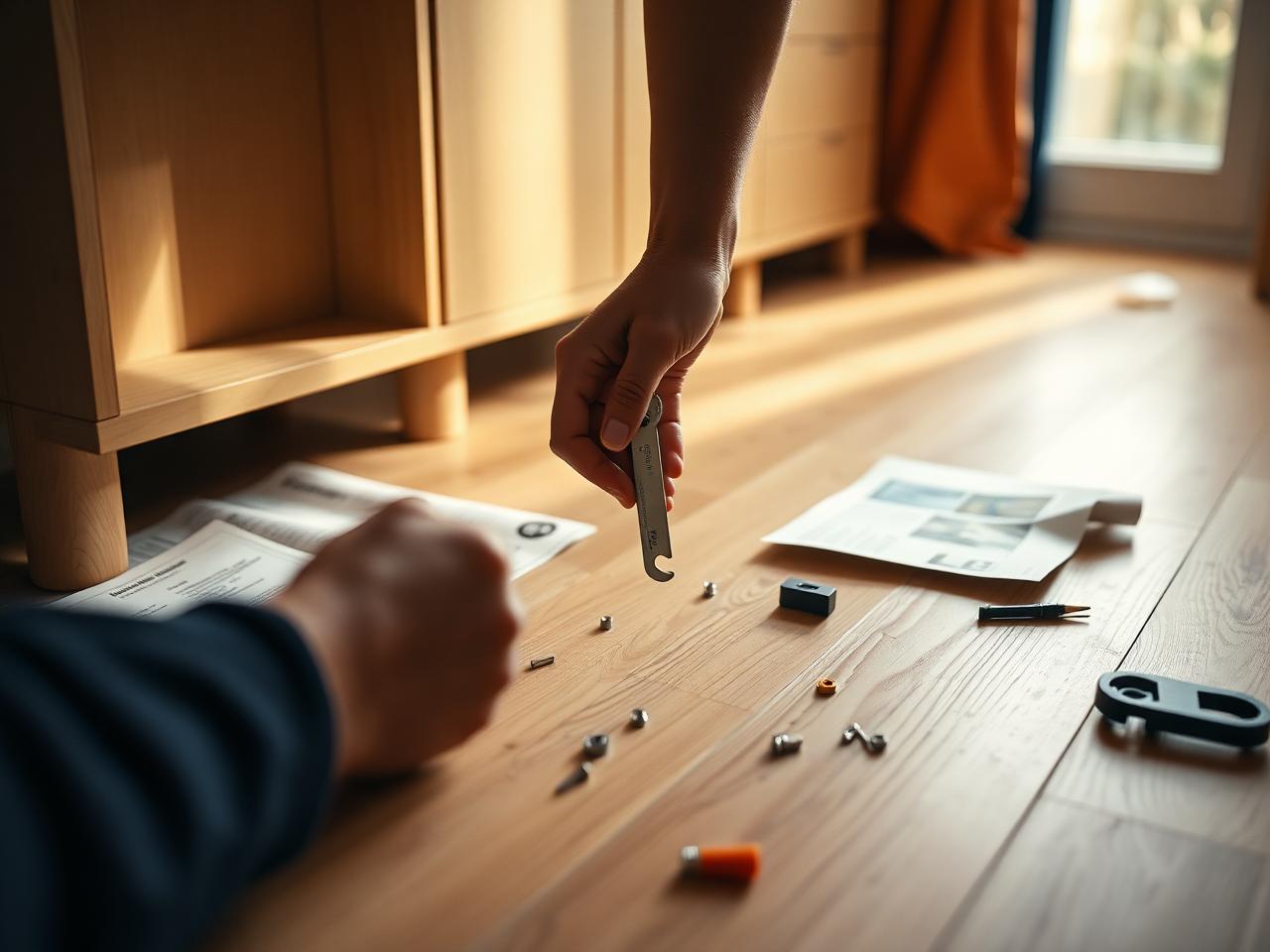
A tall bookcase can appear stable while empty and then topple when a drawer is opened, somebody leans against it or weight is concentrated on high shelves. In el Baix Guinardó, professional furniture assembly needs to address three separate matters: assembling the frame as instructed, levelling it on the actual floor and anchoring it safely to the construction behind the wall finish. Hollow partitions, solid masonry and plasterboard systems do not automatically accept the same fixings. If the bookcase stands near a doorway or busy route, stability and access also need consideration. The manufacturer instructions and a description of the wall are more useful than an assumption that any large wall plug will work.
Assemble and level the bookcase before placing heavy items
Check the component inventory against the instructions and identify side panels, rails, backing board and the intended connecting fittings. A panel turned the wrong way around may prevent a structural joint from working correctly. Assemble in a clear area while protecting the floor from scratches. Do not force cam connectors or screws into misaligned holes, because damaged particleboard can lose its ability to hold a fixing. Once the frame is complete, check its squareness and ensure all feet bear appropriately on the surface. An uneven floor may need proper levelling feet or manufacturer-approved adjustment. Stacking scraps of card or loose offcuts beneath one corner is not a reliable stability solution. The manufacturer may specify a maximum height, shelf loads and a mandatory anti-tip anchorage system. Follow those requirements even if an empty cabinet appears steady. Before drilling, identify the real wall construction, its condition, existing joints and the likely routes of concealed services. Paint appearance alone does not reveal the substrate. Confirm that the anti-tip fitting is correctly positioned and can be fixed as specified before loading the shelves. A bookcase that stands upright when empty is not proof that it can withstand any arrangement of books or ornaments.
Prevent tip-over injuries and unsafe drilling
If a bookcase rocks, an attachment starts pulling from the wall or any structural joint is damaged, do not load it or allow children to climb or pull at it. Tall furniture can tip when drawers extend or heavy items are placed high up. An unsuitable wall fixing may tear out of the supporting material, allowing the entire unit to fall. Drilling blindly is also hazardous because cables, plumbing and other hidden services may be present. Electronic detectors have limitations and do not replace appropriate checks. Damp or crumbling plaster around the intended fixing position requires assessment before taking a load. Spain's CTE DB-SUA and DB-SE provide general safety and structural principles but do not certify one household wall through a website. Long or heavy panels need enough room and additional help when appropriate to avoid impact or handling injuries. The finished furniture should not obstruct a required route or prevent a door from opening. The assessment must consider both the assembled unit and the specific location where it will be used.
Choose anti-tip fittings to suit the wall and cabinet design
Fixing selection depends on the actual substrate, the anti-tip system, the bookcase geometry and the furniture manufacturer's instructions. A fixing intended for solid brick cannot simply be assumed to work in a hollow partition or plasterboard with no suitable supporting structure. Overlong screws risk penetrating concealed services, while undersized screws may not develop the necessary holding capacity. The backing panel can provide important stiffness and should not be omitted if it is part of the design. Load distribution should follow the shelf ratings; placing heavier objects low may be recommended for additional stability. Cutting panels or adding unplanned holes can affect joints and strength. Keep the references for hinges, connectors, feet and anchoring components because replacements may need a precise fit. At handover check corner joints, screws, level, door or drawer movement and the security of the anti-tip restraint. No universal safe load can be promised without the actual model specification.
Quote for assembly, levelling and secure anchorage
A useful estimate should distinguish unpacking and checking parts, frame assembly, door adjustment, levelling, identifying the wall, fitting the anti-tip system, removing packaging and the final stability check. Building a small open shelf differs from assembling a tall cabinet with multiple modules, lighting or glazed doors. If the wall needs approved reinforcement or the supplied anti-tip fittings are unsuitable, additional parts and work should be explained and authorised before the scope expands. Stair access, panel weight and limited assembly space can also affect how the work is organised. The Catalan Consumer Agency provides information on home-service quotations and contractual terms. There is no sensible flat rate based only on the number of shelves in el Baix Guinardó: the model, connections and wall construction determine the job. At completion, test the doors and drawers, confirm joints are secure and verify the anchorage in line with the manufacturer's method. Keep the instruction booklet, invoice and fixing references for any later move.
For bookcase assembly in el Baix Guinardó, share the furniture model and dimensions, available ceiling height, any information about the wall and whether the unit will stand near children or a walkway. A photograph of the location and the manufacturer's anti-tip instructions will help define the safe installation before a quote.
