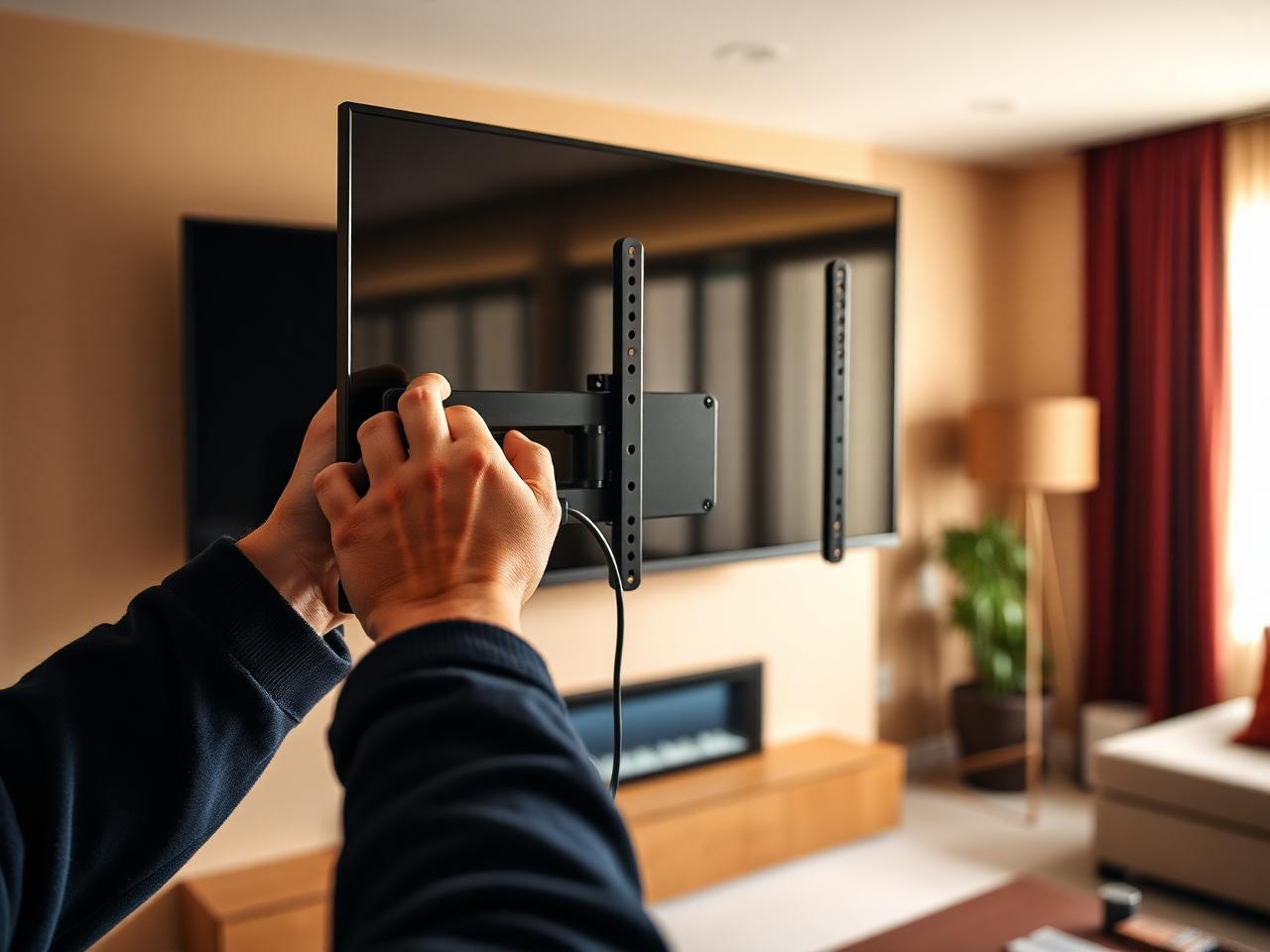
Wall-mounting a television in a home in Can Baró involves more than choosing a bracket that fits the screen. The wall material, concealed services, screen weight, anchor geometry and cable route all affect the scope. Barcelona City Council lists Can Baró within Horta-Guinardó, but that geographical fact does not tell you whether an individual wall is brick, concrete or plasterboard. To request a useful quotation, provide the television model, photographs of the proposed position and the distance to existing power and signal connections.
Assess the wall and the bracket before drilling
Record the screen dimensions and weight, its VESA mounting pattern and whether the bracket is fixed, tilting or articulated. An extended arm places different forces on fixings from a flush-mounted bracket. Identify the underlying wall and whether a lining, cavity or plasterboard layer is unable to carry the load alone. A cable detector can assist but cannot establish that every pipe or electrical cable has been found; the survey must consider sockets, switches and likely routes. In plasterboard, available reinforcement and fixing positions matter more than the appearance of the finished surface. A universal wall plug is not suitable for every substrate. Allow enough space for ventilation, connectors and access to controls. The viewing height depends on seating distance, reflections and how the room is used rather than one universal measurement. Agree how the installer will check level, stability and the full range of arm movement without overloading the wall. A crack or loose finish at the intended fixing point should be investigated before choosing a different anchor.
Safe access and final checks
Do not drill where concealed electrical cables or pipes may run without an appropriate assessment. Disconnect devices before handling connectors and never improvise mains splices. Spain's INSST warns about falls when portable ladders are used incorrectly; a heavy screen should not be lifted from an unstable position. A proposed mounting point beside an internal stair, open edge or difficult high location needs a safe access method before work begins. Do not hang a television from loose plaster or conceal visible damage beneath the bracket. After installation, confirm that fasteners follow the manufacturer's instructions, the arm moves without impact, the HDMI inputs work and ventilation openings are unobstructed. The power connection and means of disconnection should remain accessible. Retain the bracket instructions and a list of installed components. If fixed electrical wiring was altered, request the documentation appropriate to that particular job. A neat-looking bracket does not on its own demonstrate adequate anchorage. Make sure the television can be removed later without pulling on hidden cables or damaging nearby furniture.
Reuse an existing bracket or specify a replacement
An existing bracket may be suitable if its identity, rated capacity, mounting pattern, condition and anchorage can all be verified. Missing original bolts, bent plates or uncertain load ratings are reasons to consider replacement. Fixings depend on substrate type, thickness, condition and forces, not simply the drill-bit diameter. HDMI, power and data cables need routes that avoid crushing, sharp bends and strain on sockets. Hiding a mains lead inside a wall is not the same as making an appropriate fixed electrical installation. Where work would modify fixed low-voltage wiring, Spain's electrical regulation applies and an authorised electrical installer may be required. Keep mechanical mounting separate from electrical alterations in the quotation. If a streaming or smart-home device is being added, check its compatibility with the television, network and user accounts before buying adapters. An unreliable wireless connection may be caused by network configuration rather than the bracket or television. Ask which cables can be reused and whether connectors will remain accessible once the screen is in place.
An itemised quotation for mounting and setup
Request separate items for wall assessment, bracket supply or reuse, anchors, drilling, fitting, levelling, screen handling, cable management and functional testing. Surface trunking, routing behind furniture and alterations inside a partition are different solutions with different finishes and limitations. Clarify whether the scope includes moving furniture, removing an old bracket, making good previous holes, pairing remote controls or setting up applications and Wi-Fi. State who supplies the bracket, bolts and adapters and how a mismatch discovered after opening the packaging will be handled. A fixed neighbourhood price is not a reliable measure of the work: screen weight, wall construction, height and cable complexity all matter. Ask whether safe handling requires a second person and how the display will be protected during lifting. The handover standard should include stable fixing, accessible connectors, working signal inputs and cables without tension. A quotation that covers only 'hang TV' leaves uncertainty about preparation, damage repair and configuration. Compare the defined tasks and exclusions rather than assuming every installer includes the same work.
Share the screen model, known wall type and available connections in Can Baró. Request separate bracket, cabling and setup items.
