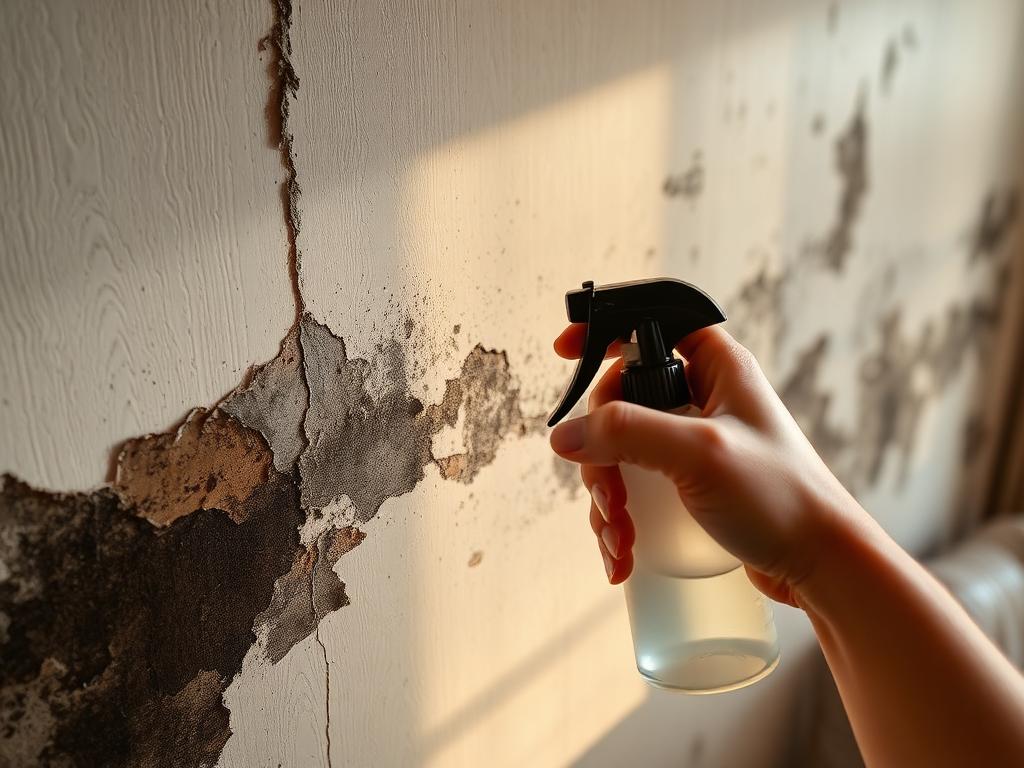
Water on a bedroom window in the morning can be a sign of condensation. Dark marks behind a wardrobe might have the same cause, or they might not. Painting over either problem before checking the source can hide it. This guide explains what to record, how to separate condensation from leaks and what to ask for when seeking a damp assessment in Sants-Badal. No one can diagnose a particular flat from its postcode. An enquiry does not reserve an appointment or confirm a price.
Record the pattern before paying for a damp treatment
Condensation forms when moist air meets a surface cold enough for water to collect. Droplets on glass do not prove that a separate stain on a wall has the same cause. For several days, note when water appears. Does it happen after sleeping, after a shower, during cooking or only after rainfall? Take photographs from the same position and mark the location of each stain. A domestic humidity meter may help you see trends, but one reading cannot establish the source or show whether a building complies with regulations.\n\nLook for blocked ventilation openings and check whether bathroom and kitchen extraction is operating as designed. Do not seal vents to stop a draught without understanding their role. The official Spanish Building Code, DB HS, covers indoor air quality and ventilation; its requirements need to be interpreted for the actual building and proposed work. If water is near a socket or switch, do not touch the affected fitting. A stain linked to a pipe, or one that grows after rain, calls for a leak investigation rather than a default anti-mould coating. Ask which observations support condensation and which would rule it out.
Cold corners and wardrobes: inspect without hiding the damage
A wardrobe placed tight against a wall can restrict air movement. Moving it slightly may reveal the affected surface, but it will not fix a leak or missing insulation. Describe whether the mark sits near a window, at a ceiling junction, on an external wall or next to a bathroom. If you do not know the wall construction, say so. A first inspection should explain whether any lining must be opened and why. Do not agree to dismantle large fitted furniture without a defined scope and a plan to protect it.\n\nA thermal camera can show temperature differences. It cannot, on its own, prove there is water inside a wall. Its images need to be interpreted alongside indoor conditions, the shape of the junction and any history of rain or plumbing faults. The official Building Code health and hygiene guidance provides a framework, not a remote diagnosis. Covering a damp wall with impermeable boards can conceal continuing damage. Low-level staining with salts may suggest a different process from overnight condensation. Record the state of nearby timber and fabrics, and ask what will be checked before surfaces are closed again.
Ventilation, insulation and leak repairs solve different problems
If the evidence points towards condensation, assess air supply, extraction, movement of air between rooms and cold junctions. Opening a window briefly can change the conditions, but it is not a substitute for checking the ventilation system. A dehumidifier may lower airborne moisture while it runs. It does not repair a leaking pipe or defective roof covering. Ask about electricity use, noise, emptying and maintenance before treating it as a useful temporary measure.\n\nInternal insulation needs a design that deals with vapour and junctions around windows, structural elements and floors. Adding a panel without considering those details can shift where moisture collects. Replacing a window can also change ventilation, so the two decisions should not be separated. The official DB HS 3 guidance describes different ventilation components; it does not mean one generic vent suits every bedroom. Work affecting a façade or communal duct may require permission. If the source is rain entering a roof or terrace, request a waterproofing assessment instead. Ask the quotation to compare suitable options, their limitations and how the result will be checked.
Visible mould: protect people and deal with the source
Black spots in a photograph do not identify the species of mould, the extent of hidden growth or the health risk to a particular person. If the affected area is extensive, someone is vulnerable or symptoms are present, seek appropriate professional advice before disturbing materials. Do not dry-scrape visible growth. Never mix bleach with ammonia, acids or other cleaning products. A proposal should separate surface cleaning, removal of damaged material, treatment of the underlying surface and correction of the moisture source.\n\nThe Spanish workplace safety institute's indoor environmental guidance discusses humidity and biological agents, but it is not a medical assessment. If plasterboard, porous finishes or timber are damaged, ask how retention or removal will be decided. Protect adjacent rooms and agree safe waste handling. Finishing paint belongs at the end, once the cause has been addressed and the substrate is ready. There is no reliable drying period that applies to every wall. Request a clear completion check: no active water source, documented change in conditions and a plan if marks return. Before-and-after photographs alone cannot prove that the underlying cause has gone.
Sants-Badal: give useful details and request an itemised quote
The Barcelona City Council listing for the Sants-Montjuïc Housing Office gives its address as Antoni de Capmany 23, in Sants-Badal. This confirms the neighbourhood and district. It says nothing about the age, layout or damp risk of a particular building. To explain your case, provide the full address, floor, affected room, when the marks started and whether they change after rain. Include safe wide and close-up photographs. Mention nearby windows, plumbing and ventilation. Tenants should notify the landlord and check who may authorise work. Shared building elements may need the managing agent's involvement.\n\nTo request a damp assessment quote in Sants-Badal, ask for separate lines for inspection, measurements, opening any lining, ventilation or insulation work, mould cleaning, making good and waste removal. The Catalan Consumer Agency's guidance on home repairs recommends a written estimate. Its pre-contract information guidance explains what customers should receive before agreeing. Confirm exclusions, permission requirements, possible variations and the checks at completion. An enquiry does not fix a price or appointment.
Frequently asked questions
Related services
Tell us what you need and request a written quote.
Sources consulted
- Oficina de l'Habitatge de Sants-Montjuïc — Ajuntament de Barcelona (2026-10-28)
- CTE DB HS Salubridad — Código Técnico de la Edificación (2026-10-28)
- Documento Básico HS 3 Calidad del aire interior — Código Técnico de la Edificación (2026-10-28)
- Calidad del ambiente interior — Instituto Nacional de Seguridad y Salud en el Trabajo (2026-10-28)
- Reparación de productos y servicios a domicilio — Agència Catalana del Consum (2026-10-28)
- Información precontractual y condiciones — Agència Catalana del Consum (2026-10-28)
