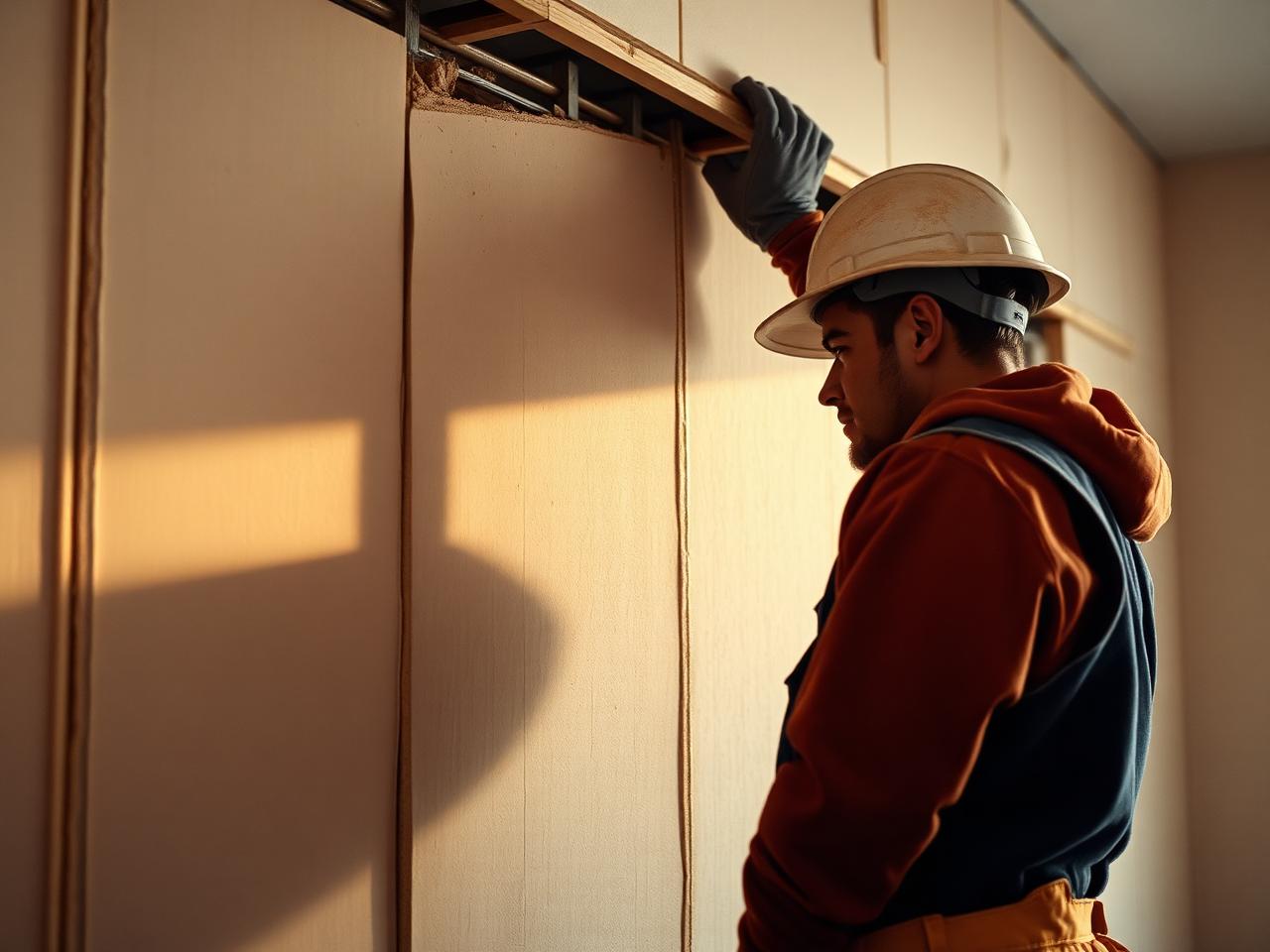
Before installing a plasterboard partition in Sants, decide what it is meant to achieve: divide a room, conceal services, reduce noise or repair a damaged lining. Those aims call for different assemblies. Sants is an official Barcelona neighbourhood, but its name tells you nothing reliable about a particular building's structure or damp conditions. Measure the room and mark doors, windows, radiators, sockets and points where furniture will be fixed. Establish whether the existing wall is load-bearing, separates dwellings or forms part of a fire-protection arrangement. Plasterboard alone does not automatically provide effective sound insulation or fire resistance. Ask for the full system to be specified before agreeing to the work, including what will remain accessible for later maintenance.
Sound insulation is a system
Reducing speech and other airborne sound involves more than adding a sheet of board. Studs, layers, absorbent infill, junctions, seals and service penetrations all affect performance. Spain's CTE DB HR provides the framework for protection against noise, while manufacturer performance figures relate to particular tested assemblies. Ask how the proposed work addresses sound bridges at floors, ceilings, socket boxes and door openings. A gap around a door can limit the benefit of a well-designed partition. Distinguish airborne noise from vibration transmitted through the structure; the same lining may not solve both. Do not rely on a promised decibel reduction without a suitable assessment of the existing conditions.
Sequence the trades before closing the wall
Start with measured drawings, openings and the intended finished dimensions. Check interference with existing wiring and plumbing before installing the frame. Studs and anchors must follow the chosen system's requirements. Photograph cable routes, pipes and reinforcement while the wall is still open; those records help prevent later drilling damage. Jointing compounds and tapes need proper application and drying before decoration. Painting too early may expose bands or cracks. Agree how floors will be protected, how dust will be contained and who removes offcuts. Coordinate electrical, joinery and painting work so a finished partition does not need to be opened again. Fixed electrical changes require competent personnel.
Damp, fixings and fire precautions
Moisture-resistant board does not stop an active leak. Find and resolve the source of water, then assess the substrate before enclosing it. In wet areas, distinguish the board itself from the waterproofing and final surface finish. If wardrobes, televisions or other heavy items will be attached, specify loads and reinforcement before closing the frame. Do not drill blindly where cables or pipes may run. Where a partition affects escape routes or fire compartmentation, its design needs to respect the applicable CTE DB SI requirements. Decorative board should never be mistaken for a certified fire-protection assembly. Keep the specification of any specialist materials for future reference.
Compare the written scope
For a Sants address, whether council procedures or building-management consent are relevant depends on the actual work, not on a blanket assumption about the neighbourhood. Request an itemised quote covering area, board types and layers, framing, acoustic infill, reinforcements, joints, finish, waste and exclusions. The Catalan Consumer Agency recommends written quotations and agreement before extra costs are incurred. Check whether painting is included or the wall will only be prepared for decoration. At handover, inspect straightness, joints, door clearances and load-bearing fixing points. Keep photographs of concealed services, product references and invoices for later maintenance or alterations.
Send the Sants address, measurements, photographs and purpose of the partition. Request a specified assembly and an itemised quotation.
