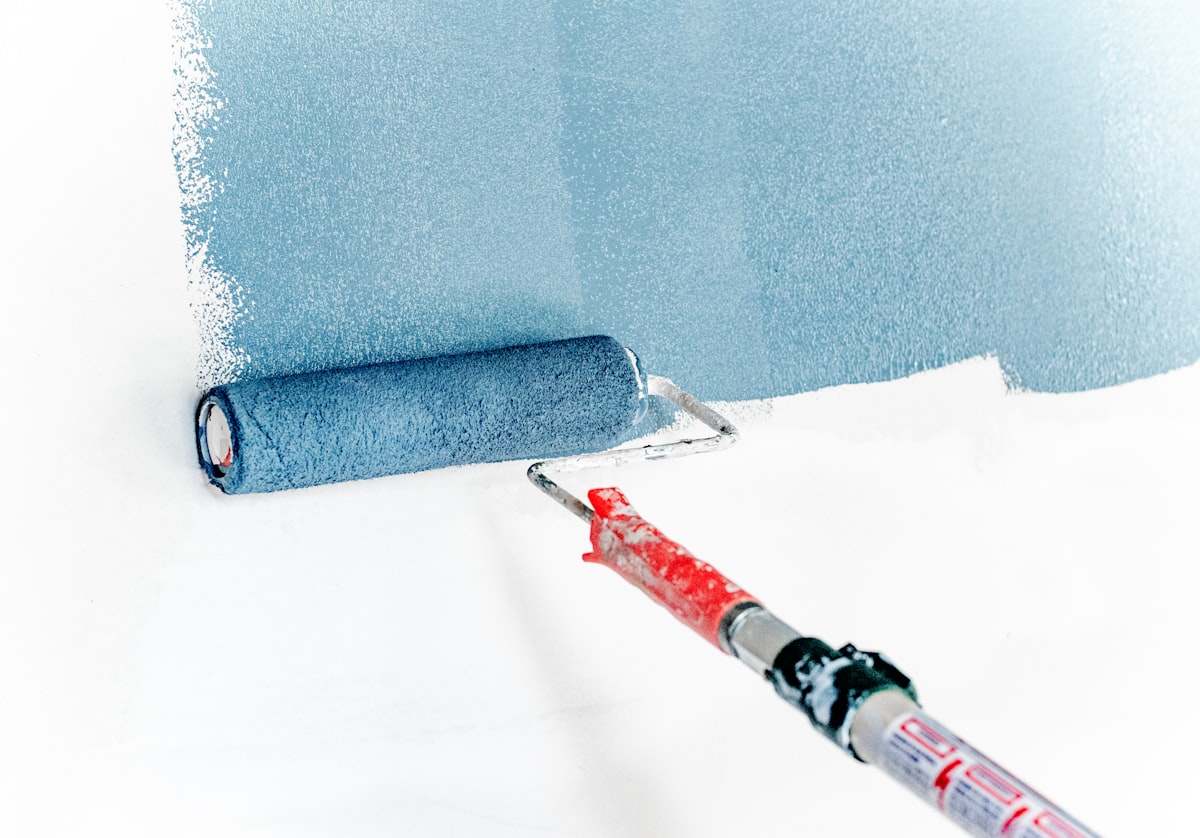
Painting a flat or commercial space in El Fort Pienc should begin with checking the surface and how each room is used, not simply choosing a colour. El Fort Pienc is an official Barcelona neighbourhood, but its name cannot establish the condition of a particular wall or ceiling. Flaking paint, a water stain and a sound surface needing a colour change require different preparation. Inspect corners, ceilings, joints, woodwork and areas behind furniture. Note which rooms remain occupied and how they can be ventilated. Photograph peeling areas, cracks and sheen differences before requesting a quotation. A useful quote distinguishes investigation, repairs, primer, coats and protection of furniture.
Prepare and paint in a controlled sequence
Move portable items, protect floors, sockets and joinery, and agree where each colour will finish. Remove grease and dust with methods suited to the existing coating. Repair minor defects, allow proper drying and prepare the surface before priming. Porous, glossy or patch-repaired areas may need different treatment to prevent uneven absorption. Check joints and sealants before painting across them. Follow the manufacturer's drying and recoating times; two rushed coats are not the same as a properly applied system. For an occupied El Fort Pienc flat, organise work room by room while keeping safe routes through the property. Inspect cutting-in, roller marks and splashes in side lighting before protective sheets are removed.
Investigate stains and peeling before covering them
Water marks, salts, mould or blistering paint may indicate an underlying problem. A leak, rain penetration or condensation cannot be cured simply by applying stain-blocking paint. Establish whether moisture is still present and request assessment for persistent ingress or extensive damage. Scraping a finish without knowing the substrate can spread dust or damage a fragile base. Check adhesion of existing ceiling coatings before adding more layers. No one can guarantee a stain will stay hidden while the water source remains. Spain's CTE DB HS sets broader moisture and hygiene requirements but does not identify the cause in an individual property. Record recurring marks before decorating over them.
Choose coatings for the room and substrate
A kitchen, bedroom and frequently touched corridor may need different washability, durability and odour characteristics. Compare product data sheets, primer compatibility and maintenance instructions. Do not assume a coating marketed as washable tolerates every cleaner. Glossy finishes can reveal imperfections rather than hide them. If solvent-based products are used, follow precautions on ventilation, flammability and personal protection. Spain's INSST publishes guidance on solvent exposure. Disclose children, pets or occupants sensitive to fumes before selecting products. Ask for the exact coating and specification, not merely a brand name. Suitability depends on the actual surface and application conditions.
Measurements, written scope and final inspection
For a quotation, provide approximate wall and ceiling areas, room heights, colour changes, doors and radiators to be painted, substrate condition and furniture that needs moving. Separate protection, cleaning, repairs, primer, coats, materials, waste and final cleaning. Ask how additional damp damage or cracks discovered during preparation would be priced and approved. Do not accept material substitutions or extra costs without agreement. The Catalan Consumer Agency advises clear written estimates for home services. At handover, inspect uniformity in daylight and artificial light, clean edges, paint-free fittings and adequate ventilation before reoccupying rooms. Keep the product name, colour reference, invoice and care guidance. A neighbourhood name alone cannot justify a fixed painting price.
Send photographs and measurements of the El Fort Pienc rooms. Request a written quote covering preparation and finishing.
