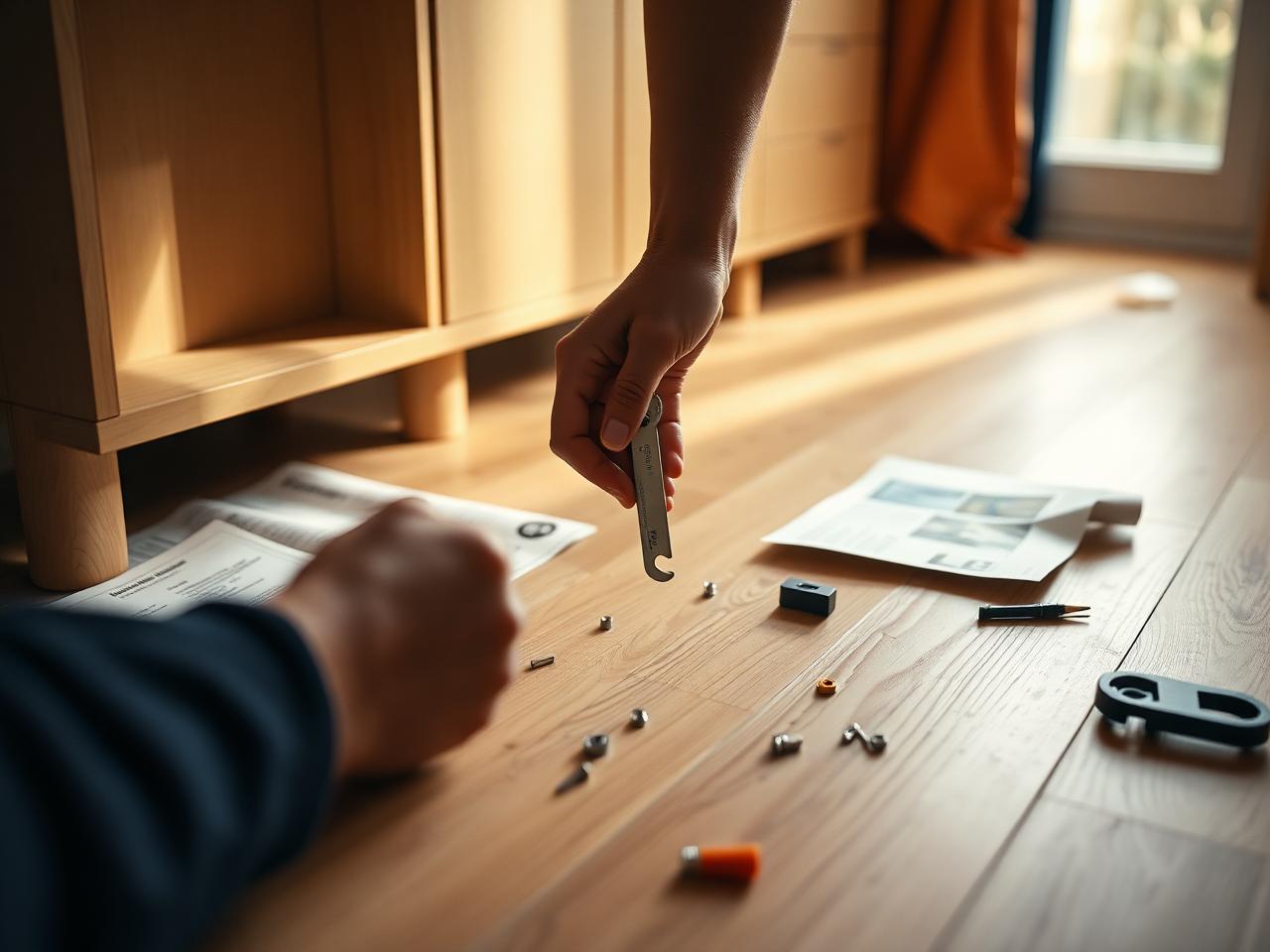
Furniture assembly in Ciutat Meridiana may involve a modular wardrobe, shelving, a desk, a storage bed, kitchen units, wall fixing or dismantling an existing item before rearranging a room. Ciutat Meridiana is an official Barcelona neighbourhood, but its name cannot establish the dimensions of a home, wall construction or access arrangements. A useful enquiry includes the manufacturer and model where known, number of packages, overall measurements, photographs of the intended position and any missing parts. Assembly is more than joining panels: before a tall wardrobe is secured, level, squareness, stability and wall support need checking. Distinguish a new flat-pack item from used furniture with worn fittings or stripped fixing holes.
Wardrobes, shelving, beds and kitchen furniture
Assembly work can include hinged or sliding-door wardrobes, chests of drawers, storage beds, desks, kitchen cabinets, shelving and smaller furniture. Each system has its own sequence. A wardrobe needs a level base and checked diagonals before door adjustment; shelving needs appropriate load distribution and fixings; a bed with a lifting mechanism must not be forced into position. Identify every panel and fitting against the manufacturer's instructions before starting. A screw that looks similar may have the wrong length, thread or function. Particleboard can lose holding strength after repeated dismantling, particularly near edges. When fittings are missing, confirm a compatible replacement rather than drilling new holes without a plan. Aligning kitchen doors will not solve an unsupported worktop. Gas, electrical and plumbing alterations are not ordinary furniture assembly and require a separately defined scope and appropriate specialist. Agree whether unpacking and removal of packaging are included, rather than assuming the assembler will dispose of everything.
Damaged panels, unsafe furniture and access limits
Stop loading a rocking wardrobe, a shelf pulling away from its brackets or a unit showing cracks around fixings until the cause is assessed. Water-swollen particleboard may have lost strength; tightening a screw harder will not restore the material. Crumbling plaster or damaged wall lining may indicate a support problem beyond furniture adjustment. In an occupied home, reserve a clear sorting area and protect floors and panel edges. Long boards carried through narrow passages create an impact risk. Measure the lift, stairs, landings and doorways before arranging delivery of bulky modules; do not assume they will fit. When dismantling an old item for transport, consider whether its joints can survive reassembly. Fire doors, escape routes and shared-building components must not be altered as incidental assembly work. If concealed cables or pipework become apparent, stop drilling and reassess. Photographs can help plan the job, but they do not prove an anchor's load capacity.
Levelling, runners and anti-tip wall fixings
A crooked wardrobe door can result from an uneven floor, poorly adjusted hinge, warped panel or cabinet assembled out of square. Check diagonals and supports before ordering a replacement door. Drawer runners must match width, travel and expected load; visually similar components are not always interchangeable. For tall cabinets and shelving, identify whether the wall is masonry, concrete, plasterboard or another system before choosing anchors. The appearance of a wall does not establish its strength, and fixing selection should not be based on diameter alone. Furniture presenting a tip-over risk needs stabilisation consistent with the manufacturer's instructions and actual substrate. Spain's Technical Building Code DB SUA addresses broader use and accessibility safety; it does not replace product-specific assembly instructions. Before drilling, check for concealed services, sockets, radiators, door swings and necessary passage widths. If the wall cannot be assessed confidently, hold the fixing stage rather than claiming it is safe.
An itemised furniture-assembly quotation
Request a written quotation separating the number and type of units, unpacking, sorting parts, assembly, levelling, door and drawer adjustment, wall anchoring, additional fittings, packaging removal, transport and tax. Clarify whether existing furniture dismantling, carrying boxes upstairs, cutting skirting, trimming panels or bespoke changes are included. These are not equivalent to standard flat-pack assembly. For used furniture with damaged hinges or boards, compare repairing a component with replacing that component; an entire unit may not need replacing. The Catalan Consumer Agency advises obtaining a written service scope and approving changes before extra work proceeds. Ask for the identity of any additional hardware rather than accepting an unexplained materials supplement. On completion, check door movement, drawers, squareness, level, accessible fixings and stability, and record outstanding defects. A photograph of the finished room does not certify wall-anchor strength or replace manufacturer safety instructions.
For furniture assembly in Ciutat Meridiana, send the brand and model, instructions if available, photographs of boxes and parts, measurements, known wall type and access details. Explain whether dismantling, fixing, adjustment or repair is needed alongside assembly. A final quotation should reflect the verified scope.
