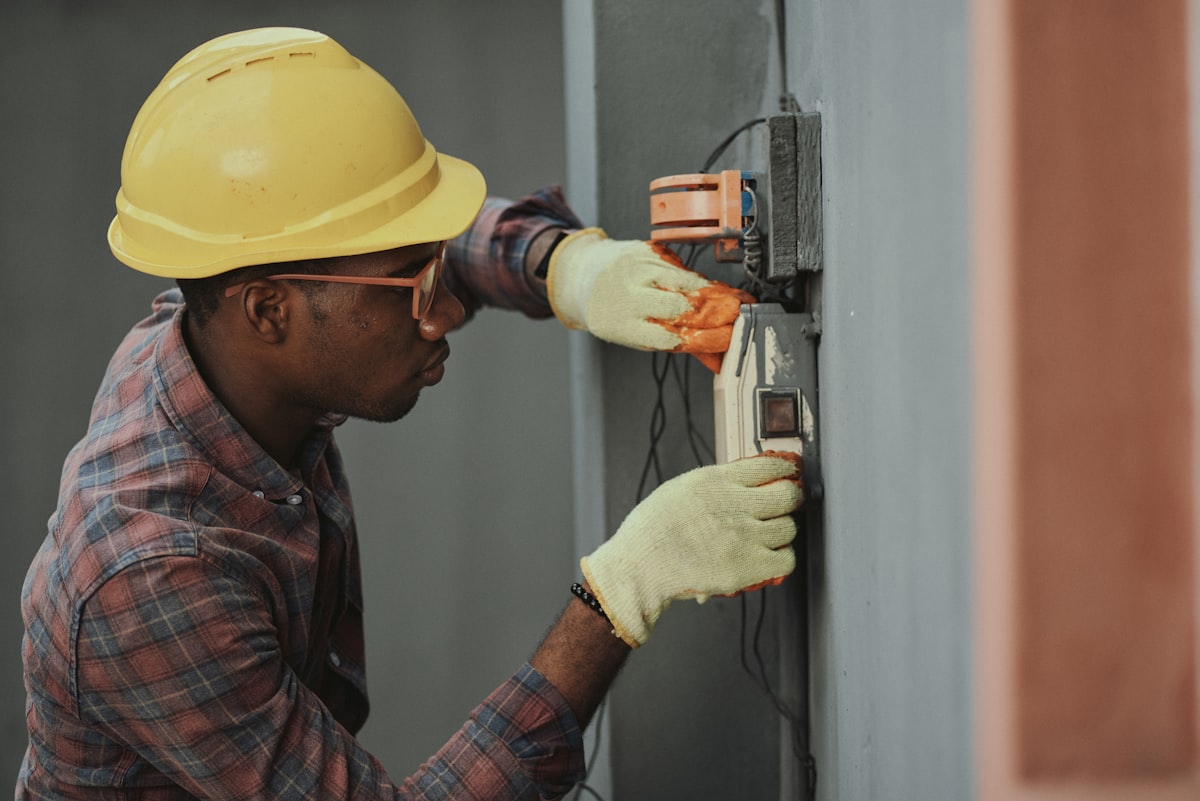
A doorbell that stops ringing in Torre Baró does not necessarily need a new push button. The fault may lie in the button, signal cable, chime, power supply or transformer, which needs to be assessed safely. It also matters whether the system is a conventional doorbell, a shared building intercom or a connected video unit: their wiring and components are not interchangeable. Before buying a replacement, explain what happens when the button is pressed and whether one home or several properties are affected. Torre Baró identifies the Barcelona neighbourhood of the enquiry; it does not establish what equipment a particular building contains.
Distinguish the button, chime, power supply and shared intercom
Record whether pressing the button produces a click, a weak buzz or no response. Check only normal user settings, such as volume, silent mode or a battery designed to be user-accessible according to the manual. If the fault is intermittent, explain whether it started after an equipment change or under particular conditions, without deliberately creating unsafe tests. If other residents cannot receive calls from the entrance panel either, a shared power supply or common component may need investigation by the building's authorised maintainer. A video screen that will not power on calls for different checks from an electromechanical chime. Do not join wires as an experiment or connect a low-voltage unit directly to the mains. A competent professional should identify the circuit and decide whether the button, wiring, transformer, supply or indoor unit is responsible. Separating these possibilities prevents money being spent on parts that cannot fix the underlying fault.
Safety and permission before working on a shared entrance
Stop using the system and request an assessment if a transformer smells burnt, buzzes abnormally, becomes excessively hot or causes a protective device to trip. Do not open consumer units, junction boxes or power supplies: a low-voltage doorbell may have a transformer with a mains-voltage input. A blank screen does not prove its conductors are safe to touch. If the intercom belongs to the building, notify the manager and establish who can authorise the diagnosis and expenditure. If it operates an electric door release, do not bypass the opening mechanism as a test, because that may compromise entrance security. For an immediate danger to people, contact the relevant emergency services. The aim is to preserve safe access and avoid turning a failed call signal into an electrical or door-security problem. The exact repair must follow the system's design and lawful authorisation.
Check voltage, power rating and equipment compatibility
A push button that looks identical may not be compatible with a digital intercom. Rated voltage, signalling method, power supply and manufacturer specifications matter. If a replacement chime is proposed, ask whether the unit itself has been shown to fail or simply receives no supply. If the transformer needs changing, its output, power rating, protection and compatibility with connected devices must be checked. Shared intercoms may require system-specific parts and permission to work on communal components. A smart video doorbell adds network, power and privacy considerations that cannot be resolved by fitting a conventional button. Request relevant testing and confirmation that calling and, where applicable, authorised door release work correctly. Spain's low-voltage electrical regulations establish safety requirements for installations within their scope, but they do not identify the fault in a specific device without examination. Ask for part references and a clear explanation before approving a change.
Separate fault-finding from replacement and installation
Request a written quotation naming the provider and itemising travel, inspection, button, transformer, chime or indoor-unit replacement, labour, tax and applicable supplements. Diagnosing a failed call circuit is not the same task as installing an entirely new video intercom. If the system is communal, clarify whether the proposal covers a single flat or shared equipment and who must authorise the work. The Catalan Consumer Agency advises consumers to obtain written estimates and to approve increases before extra work is performed. If a shared power supply is faulty, ask for a revised assessment rather than agreeing to replace a screen that may be sound. Keep the invoice, part references and any required technical documentation. No fixed price or guaranteed arrival time is offered because equipment, access and authorised scope vary. A useful estimate explains which tests support each proposed replacement and how the completed system will be checked.
Describe whether the button, call signal or indoor unit fails and request a written electrical estimate in Torre Baró.
