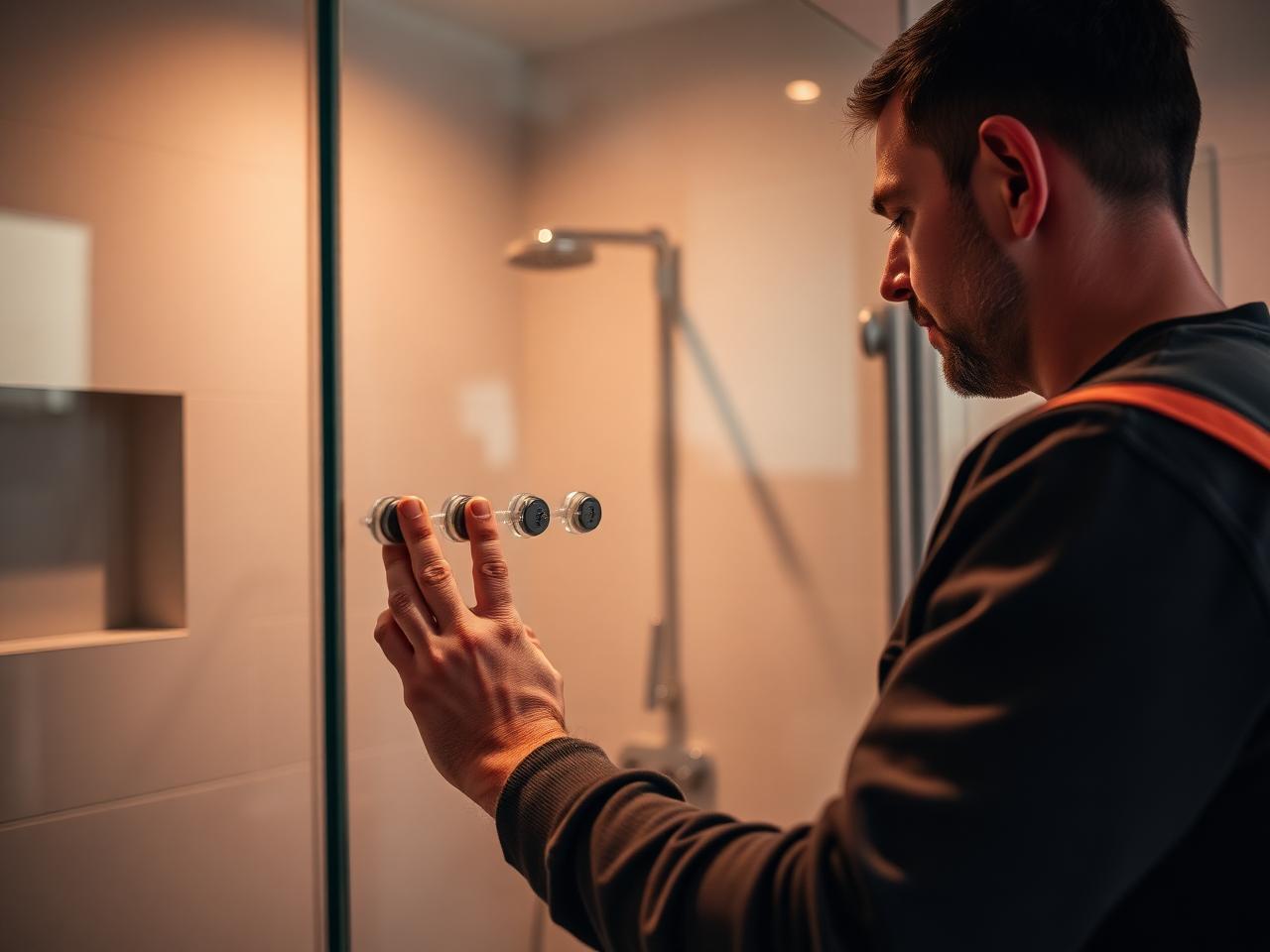
A glazing enquiry in La Font de la Guatlla may involve mist trapped between the panes of a window, a crack running out of a glass edge, a glazed door that catches on its frame, or a shower screen leaking onto the floor. These are not interchangeable faults. Renewing external sealant cannot repair a failed sealed glazing unit, while replacing glass alone may not correct a misaligned door. Identify the glass specification, supporting frame, use of the opening and immediate safety risks before choosing a repair. A neighbourhood name cannot establish the age or construction of an individual property.
Diagnosing glazing faults before ordering replacement glass
Start by locating the moisture. Condensation that appears on the room-facing surface and wipes away may relate to indoor humidity, ventilation or surface temperature. Mist remaining between the panes of a sealed double-glazed unit is a different symptom; cleaning the accessible faces will not remove water trapped inside. Photograph the window at different times and note whether droplets can be seen within the cavity. The Spanish Building Technical Code's DB-HS documents address health and moisture, but cannot diagnose one particular window. Ventilation, frame condition and thermal bridging may need separate consideration before promising a cure. A crack requires a different assessment. Record whether it starts at an edge, follows a corner, has a visible impact point or appears close to a fitting. Impact, installation stress, movement of the frame and temperature differences are possible explanations, not findings that can be asserted without inspection. Do not press the pane or treat adhesive film as a structural repair. Keep people away from loose fragments and arrange appropriate protected removal. The DB-SUA documents cover safety in use and impact risks in their relevant contexts, but the correct replacement depends on the glass position, function and applicable requirements. If a glazed door catches, examine hinges, rollers, tracks, stops, seals and frame alignment before assuming the pane is defective. A displaced guide can make a door vibrate or strike the frame on closing. Do not adjust heavy fittings while the leaf is hanging unsupported. Drilling a new hole into an existing toughened pane is not an ordinary on-site adjustment; its manufacturing and holes must have been planned. Shared access doors and escape routes require particular care and any necessary permissions before work begins. A shower screen leak can arise at the tray junction, a worn profile, the opening geometry or plumbing behind the surface. Removing old sealant, cleaning and drying the joint may be appropriate when only the exposed seal has failed. It will not repair a moving tray, damp backing or hidden pipe leak. Check rollers, tracks, door overlap and the path water takes during use. Never tighten a fitting against cracked glass. Any replacement sealant must be compatible with the surface and allowed to cure before the shower is used again. Prepare a useful enquiry with a wide photograph and a close-up, approximate opening dimensions, the way the panel opens and the location of the defect. Explain whether the pane can be reached safely from inside, whether access equipment may be needed and whether it belongs to a communal element. Final manufacturing dimensions must be confirmed by measurement, not estimated from a perspective photograph. The appropriate outcome may be hardware adjustment, joint repair, replacement of a sealed unit or referral of a wider frame or moisture problem to another trade.
When to stop using a damaged glass panel
Stop using a panel that is cracked, loose in its frame, shedding fragments or at risk of falling into a circulation area. Keep people away without touching the broken edges. Large panes, elevated glazing and heavy doors require suitable handling equipment and trained assessment; improvised removal can turn a contained defect into an injury. If the glass forms part of a balustrade, roof, fire protection element or escape route, a visually similar replacement may not have the required performance. Establish the applicable safety specification before ordering or fitting a new piece.
Choosing glass for its function, not its appearance
Depending on the opening, the specification may involve laminated glass, toughened glass, an insulating glass unit or a suitable combination. Check thickness, weight, edge support, setting blocks, seals and the capacity of existing fittings. The DB-HE documents provide an energy-efficiency framework, but cannot justify a specific savings claim without considering the entire window assembly. A higher-performance unit may be too heavy or too thick for the original frame. Ask for a written product description, verified dimensions, relevant performance information and the proposed fitting method. A familiar brand or matching tint does not establish impact safety, compatibility or adequate weather sealing. The official technical references are background standards, not proof that a particular installation has been inspected or completed.
Comparing adjustment and replacement quotations
An itemised quotation should distinguish diagnosis and final measurement, removal and disposal of the existing pane, supply of the specified replacement, seals and hardware, fitting, protection of finishes and final opening or water-tightness checks. Adjusting a roller is not equivalent to manufacturing a sealed glazing unit. Renewing silicone does not include tracing hidden water ingress. Size, access, handling requirements, glass specification and the state of the frame affect the actual scope; the neighbourhood alone cannot establish a reliable price. Compare quotations against the same safety and performance specification. Ask who confirms manufacturing measurements, what is excluded and how unexpected frame damage will be assessed and authorised before additional work. A single total without component descriptions may conceal material differences.
