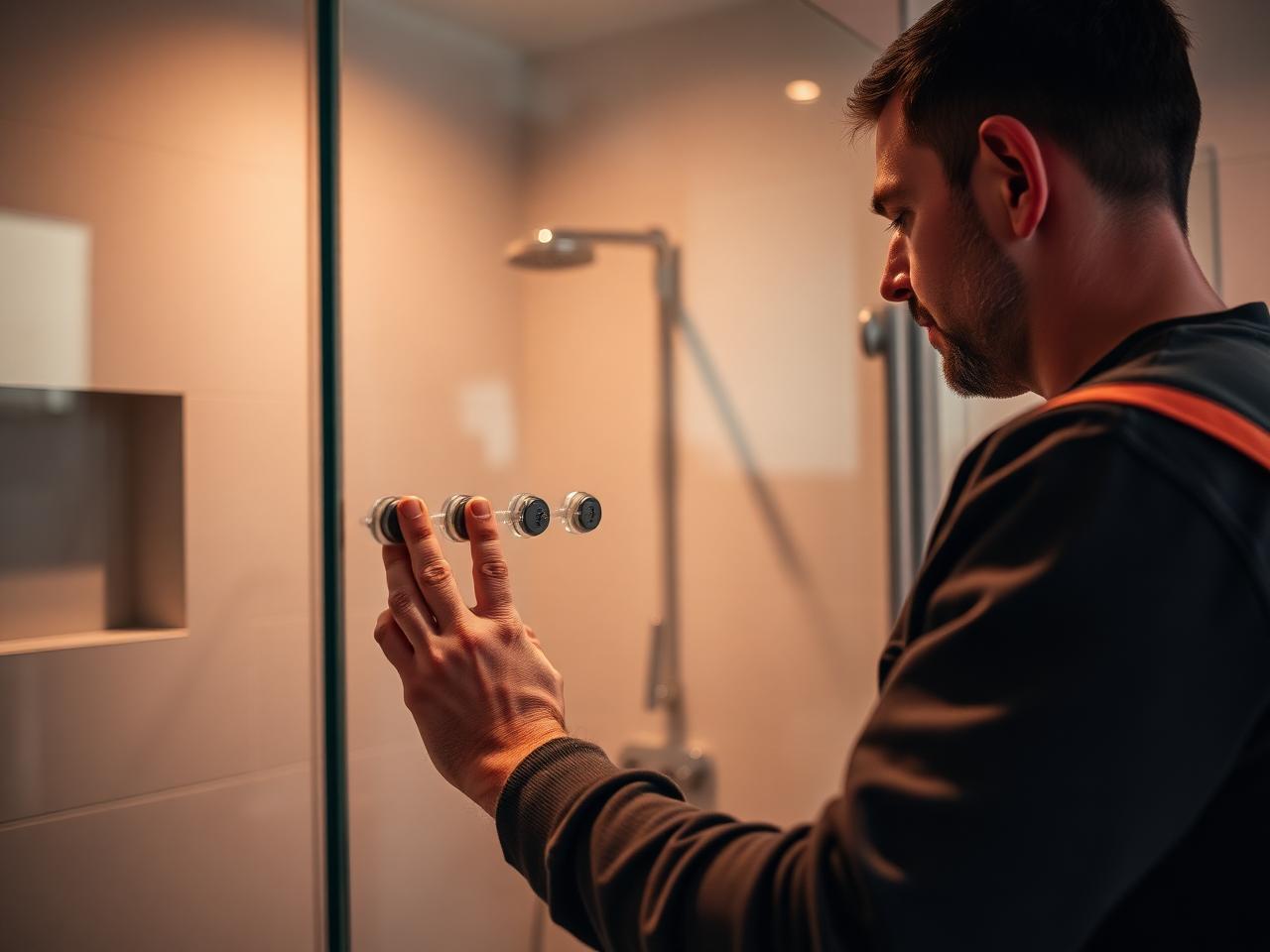
A glass shelf with a chipped corner in el Guinardó is not necessarily made safe by polishing the edge. The first distinction is between a superficial mark and damage that could develop into a crack under load. The supports need attention too: glass thickness, composition, shelf dimensions, edge finish and fixing arrangement all affect whether the assembly can remain in use. Before requesting glazing work, remove the load without handling the damaged edge, photograph the shelf safely and record what it was intended to hold. A useful assessment considers replacement of the pane, correction of its supports or both, rather than assuming a weakened shelf can continue carrying weight.
Assess the edge, the supports and the intended shelf loading
Locate the damage precisely: an exposed corner, a clamp contact point, an area near a drilled hole or the centre of the pane. A chip close to a support is particularly concerning because forces may be concentrated there. Look for visible cracking, rocking, uneven supports, movement in the wall fixings and any sign that the shelf has slipped. Do not try to remove a large cracked sheet without suitable assistance and protective equipment. Record the width, depth, thickness and spacing of the supports. If reliable product documentation exists, use it to identify whether the glass is toughened, laminated or another type; appearance alone is not a dependable test. A shelf holding a few light ornaments and one carrying books have different loading requirements. A shelf above a frequently used passage also presents a different consequence of failure from a shelf inside a closed cabinet. A replacement must be specified for its actual support geometry and intended use, not merely cut to fit an empty space.
Unload a cracked shelf and keep people away from falling glass
If the pane has a visible crack, an open chip or a loose support, stop using it and keep the area clear. Children and pets should not be allowed near fragments. Household glue is not a suitable structural repair for a corner that must carry weight. A shelf above a bed, desk or circulation area deserves particular caution because falling glass can injure people below. The neighbourhood identifies the enquiry location but does not establish the construction of the wall, furniture or any previous installation. Send photographs of the edge, each bracket and the complete assembly, together with approximate measurements and intended contents. A professional decision should follow examination of the actual system rather than a promise based solely on a photograph.
Specify suitable glass, finished edges and secure supports
Toughened glass cannot simply be cut or drilled after treatment in the way an ordinary sheet can. A damaged corner may therefore require a newly manufactured pane. Laminated glass has different behaviour because of its layers and interlayer, but that does not make damaged glass automatically safe to reuse. A polished or protected edge reduces exposure to sharp surfaces, yet it cannot compensate for insufficient thickness or poor support. Clamps need suitable contact pads and an appropriate distribution of load. Wall fixings must match the actual substrate: an anchor designed for solid masonry may not work in a hollow partition. Replacing only the pane while leaving loose brackets can reproduce the fault. Check level, support spacing, anti-slip stops and the possibility of the shelf moving when an object is placed near an edge.
Itemise measuring, manufacture, brackets and safe removal
Ask for a quotation separating measurement, glass type and thickness, edge finishing, factory drilling or shaping, protected delivery, removal of the old pane and installation. If clamps, brackets or anchors need changing, those should appear as their own items with a description of the supporting material. Confirm whether disposal of broken glass is included. Where the wall or cabinet structure cannot be assessed without opening a concealed area, agree an inspection and seek approval before additional work. Ask what loading assumptions are used and how stability will be checked at completion. A universal weight limit advertised without dimensions, glass specification or bracket details is not a meaningful guarantee. Sometimes replacing the glass while retaining verified supports is appropriate; in other cases the fixing arrangement itself needs redesign. The quotation should explain which option is being proposed and why.
For a glazing quotation in el Guinardó, describe whether the shelf is chipped, cracked or poorly supported. Include dimensions, intended load and safe photographs; request a proposal that covers the glass and its fixings.
