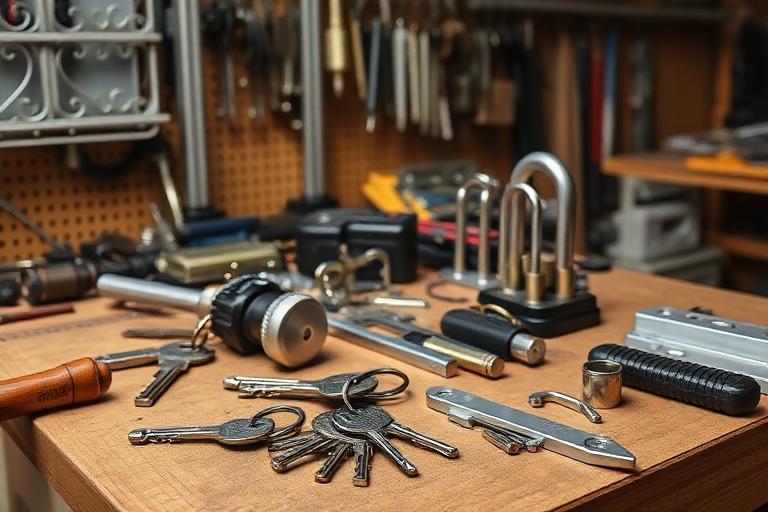
Locksmith work in El Turó de la Peira: a key that turns without opening the door does not automatically mean the whole lock needs replacing. The fault may involve the cylinder, mechanism, latch or door alignment, and should be checked before choosing a repair. If it is a communal entrance or escape door, do not alter it without authorisation and a safety review. The neighbourhood is in Nou Barris, but that tells us nothing about the lock fitted to a particular building.
How to describe a faulty lock without forcing it
First distinguish whether the key enters fully, turns stiffly, spins without moving the latch, or works only while the door is open. Do not force the key: a snapped key can make the repair harder. If the door is open and it is safe, observe without dismantling anything whether the latch moves and whether the door rubs against the frame. Never obstruct or interfere with escape doors. Photograph a maker's plate or door edge only when you are entitled to access it; do not share photographs of keys, access codes or credentials. State whether the door is private or communal and who can authorise work. These observations help distinguish adjustment, mechanism and cylinder issues without claiming a remote diagnosis.
Comparing adjustment, repair and replacement
Ask which checks justify replacing the cylinder, strike plate or entire lock mechanism. Misalignment may call for adjustment; a failed component may need a compatible replacement. They are different jobs. Before accepting, ask which model is proposed, whether it preserves the required security function and how replacement keys or access cards will be handed over. For communal entrances, confirm permission, compatibility with access control and escape arrangements, and secure handling of copies. A useful quotation separates travel, opening work where relevant, materials, labour and final checks. A photograph alone cannot establish a final price or an appointment.
Safety, responsibility and permissions
Verify access rights; shared locks and escape doors must not be altered without authorisation. Property owners or building management must confirm permission for shared areas, façades, courtyards or installations outside your control. Explain known hazards, access routes and people who may require protection. The right safeguards depend on the particular job, rather than the trade name or neighbourhood alone.
Property access and local arrangements
In El Turó de la Peira, specify whether the site is a private dwelling, commercial premises or a communal building element. Administrative location provides context, but the actual building constraints must be checked on site. Confirm steps, lift access, a lawful place to unload equipment and any building hours that the resident or manager can verify. Do not assume narrow streets or ageing properties from a neighbourhood name. In shared buildings, coordinate entry, keys and the use of communal spaces with whoever manages them. A written quotation and meaningful handover The Catalan Consumer Agency recommends written quotations and advance notice of extra chargeable work. Clarify diagnosis, materials, labour, taxes, waste handling and final checks. At handover, keep the invoice and an account of the identified cause, the work carried out and how the result was tested. Ask for each material and additional task to be identified: Adjusting a door or replacing only the cylinder may avoid a complete lock change; note brand and type.
Describe the specific issue in El Turó de la Peira, attach safe photographs and request a quotation. Submitting an enquiry does not confirm an appointment or price.
