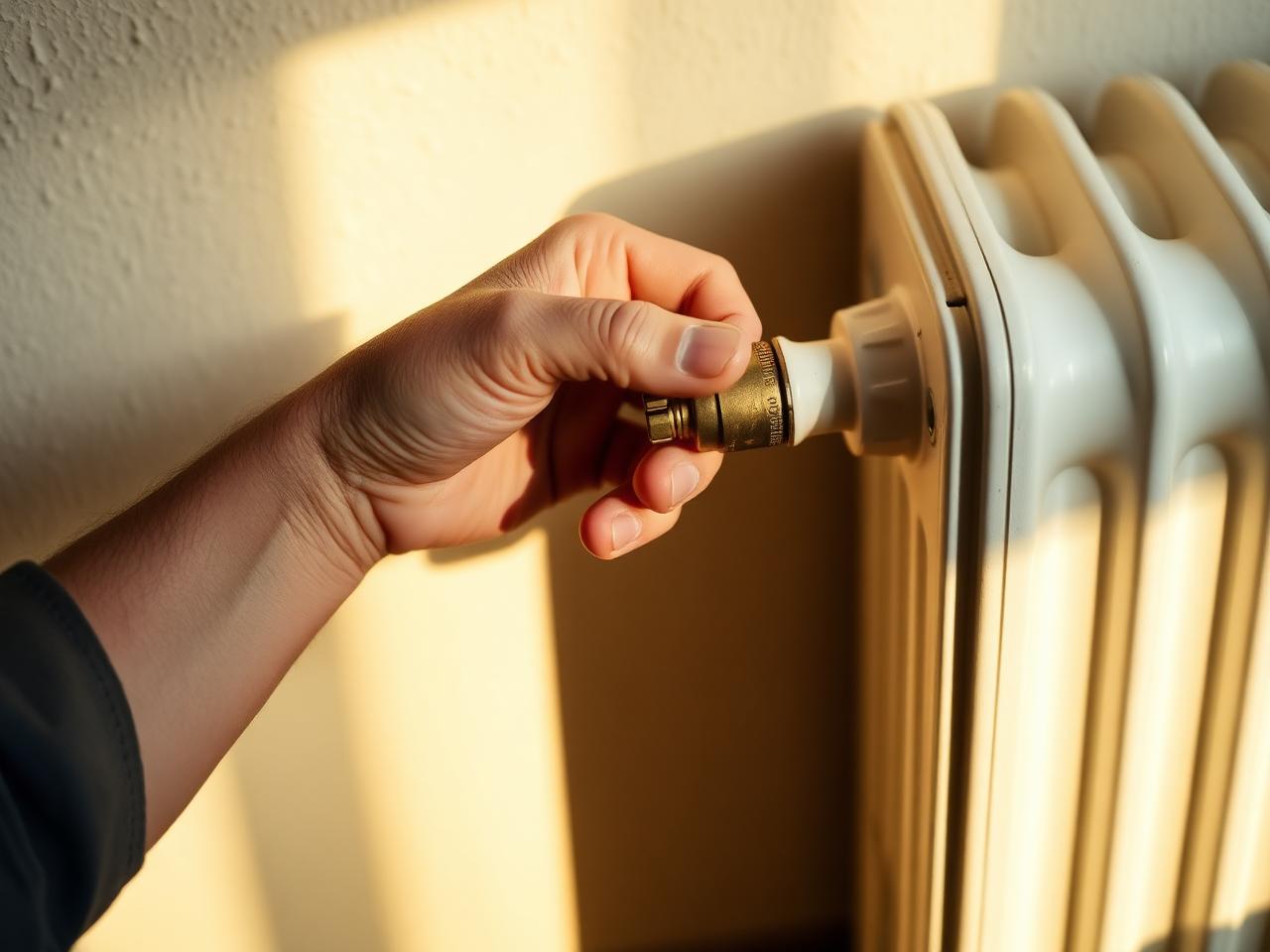
In el Camp de l'Arpa del Clot, a radiator that stays cold while others heat up may prompt a heating enquiry about a sticking thermostatic valve. The same symptom, however, can arise from trapped air, uneven water flow, an unsuitable thermostat setting or a wider circuit fault. Before requesting a repair, record which radiators are affected, whether the top feels cooler than the bottom, the thermostat setting and whether the heating is individual or communal. The neighbourhood identifies the enquiry area; it does not establish the equipment or fault in any particular building.
Distinguish valve head, air and hydraulic imbalance
Start by checking visible control settings and whether furniture or curtains obstruct the radiator. Note when the problem occurs and whether it affects one room or several emitters. Do not dismantle the head or force the valve pin without knowing the model and safe procedure. A thermostatic valve regulates hot-water flow in response to local temperature; a radiator not being hot all the time is not automatically faulty. If a room never reaches its target temperature, compare the schedule, setpoint, ambient conditions and behaviour of other radiators. A heating professional can assess the control response, flow, hydraulic balancing, trapped air and pressure under the authorised procedure for the installation. IDAE guidance distinguishes radiator-level regulation from the behaviour of the whole network. In communal heating, altering a component can affect other users and should be coordinated with the maintainer. Diagnosis should separate replacing a removable head from work on the valve body or circuit.
Avoid opening pressurised or gas-related equipment
Do not open bleed valves, pipe unions or pressurised equipment unless you understand the procedure and can control a leak. Very hot water, unusual noises or repeated pressure loss call for competent inspection. If you smell gas near a fuel-burning system, avoid flames and switches, leave the area and follow the emergency service and supplier instructions; do not attempt boiler repairs. A cold radiator does not justify changing pump settings or safety controls yourself. For central heating, contact the building community or maintenance provider before intervention. Spain's CTE DB-HE and the RITE address energy and thermal-installation requirements but cannot certify a specific system remotely. Useful observations from occupants include timing, temperatures, control positions and accessible photographs without dismantling. Ask for a record of tests if the fault returns after repair.
Match replacement controls to the valve and system
A replacement thermostatic head must match the valve body, connection and method of regulation. An adaptor cannot necessarily solve a mechanical fault, and changing the head will not repair a seized internal valve. The technician should distinguish problems in the head, valve mechanism, circulation and balancing. Replacing a valve body can require planned isolation, draining and refilling according to the system; it is not a casual task on a pressurised circuit. IDAE recommends thermostatic controls, but that does not make every product compatible with every installation. A radiator enclosed by curtains may sense a different local temperature from the rest of the room. The location of the main thermostat and interaction between controls also matter. Do not promise a particular saving percentage without knowing occupancy, insulation and existing settings. The quotation should identify the replacement specification and explain why it fits.
Separate fault diagnosis, adjustment and replacement costs
Ask for a written quotation distinguishing travel, diagnosis, control checks, flow testing, possible balancing, parts, labour, circuit restoration where applicable, cleaning and taxes. Adjusting a head differs from replacing a valve body or working on communal distribution. Ask whether the inspection compares radiators, records relevant temperatures and checks operation afterwards. If an additional circulation problem appears, require an explanation and approval before the scope grows. The Catalan Consumer Agency provides guidance on written home-service estimates and cost variations. There is no universal charge for every radiator in el Camp de l'Arpa del Clot: system type, access, compatible parts and maintenance responsibility matter. In a shared installation, confirm who can commission work and what interventions are authorised. The final record should identify installed parts, tests and exclusions.
For heating work in el Camp de l'Arpa del Clot, explain how many radiators are affected, whether heating is communal, the control setting and when the difference occurs. Request separate lines for diagnosis and replacement parts.
