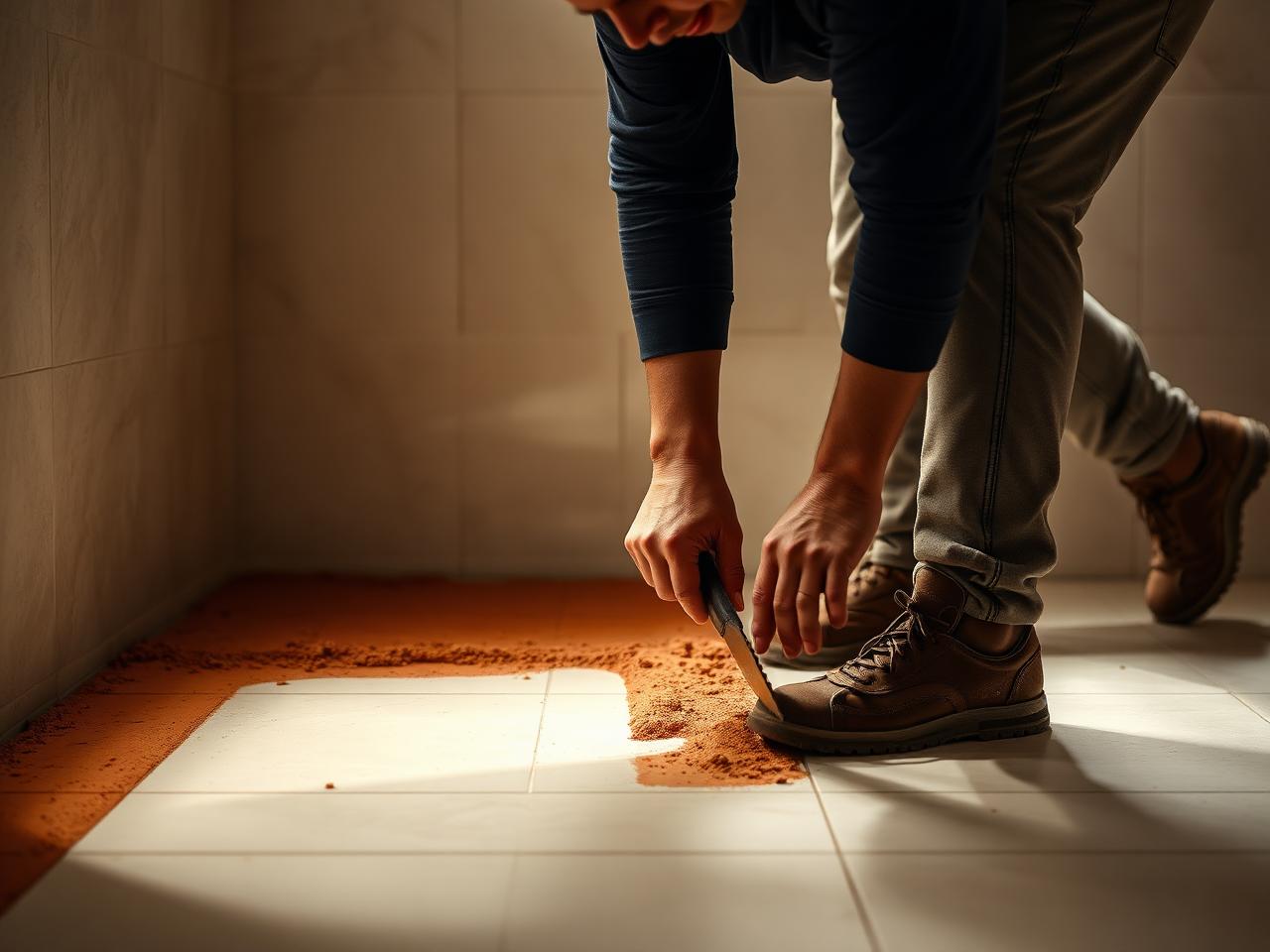
When several floor tiles in a Navas property sound hollow underfoot, the answer is not necessarily to glue each one back down. Local loss of adhesion, movement in the base, moisture or inadequate movement joints may be involved. Masonry and building repairs also cover wall finishes, plaster repairs, small sections of blockwork and junctions around doors or services. Navas identifies the neighbourhood for the enquiry; it tells us nothing about the actual floor construction, hidden pipes or materials beneath the tiles.
Checking the base before replacing loose tiles
Begin by marking the affected area without lifting tiles at random. Note whether the hollow sound comes from one tile or several adjacent pieces, whether cracks cross the joints, and whether there is a change in level. Record any recent leak or alteration to the room. A tile that rocks underfoot with a chipped edge requires a different response from a firmly fixed tile that merely sounds different when tapped. Sound alone is not sufficient evidence for removing the entire floor. An inspection should consider perimeter joints, thresholds, changes of material and places carrying concentrated loads. If the underlying screed is cracked, sticking down a tile may conceal the cause temporarily. Where moisture is present, the source needs investigating before new adhesive or waterproofing is applied. Spain's Building Technical Code DB-HS provides a framework for moisture protection where its requirements apply. A domestic stain alone does not prove that a particular regulation has been breached. If tiles are removed, the condition of the base, available depth and previous bedding material should be recorded. Cleaning, levelling or repairing a section of screed may be needed before replacement. Deep voids should not simply be filled with adhesive intended for a thin bed. Floors containing underfloor heating, concealed pipes or waterproofing layers demand extra care. The continuity of a shower or terrace membrane cannot be established by looking only at the visible ceramic surface. Replacement pieces must be compatible in size, thickness, surface texture and performance. Two visually similar tiles may offer different slip resistance. The DB-SUA documents address safe use of buildings and provide guidance on floor slip risk in applicable situations. A raised patch or sharp edge can remain dangerous even when the adhesive has set correctly. Levels, joints and door thresholds should be checked before the job is considered complete, rather than judging it solely by colour matching. Cutting ceramic, mortar or stone can create respirable dust. Spain's INSST highlights the risk from crystalline silica in construction materials and the need to control dust at source. A responsible work method considers occupied rooms, suitable cutting arrangements, waste removal and protection of nearby surfaces. Dry cutting inside a lived-in home should not be casually recommended without assessing exposure. If electrical cables or water pipes become exposed, the appropriate specialist must deal with those systems rather than treating them as ordinary tiling work.
When a local repair may be enough and when the scope should widen
Request an assessment if tiles move, edges are sharp, a crack continues to spread or moisture marks appear around the floor. A single damaged tile over a sound base may be suitable for a local replacement. Widespread crumbling screed, trapped water or repeated movement can require a larger intervention. Before accepting removal of a whole room, ask which observations justify that extent of work. If cracking crosses a wall or accompanies visible distortion of potentially structural elements, cosmetic patching must not replace a competent structural assessment. Routine masonry repair is not a structural diagnosis. Keep people away from unstable or sharp pieces until the area can be made safe.
Matching tiles, adhesives and movement joints
Choose adhesive and grout for the actual substrate, tile size, moisture exposure and anticipated movement. Different mortars and ceramics behave differently. A rigid grout line where movement is needed may reproduce the original crack. With older finishes, an exact replacement tile may no longer be sold. Agree in advance whether spare pieces can be used, a compatible alternative is acceptable or a clearly bounded area will receive a different finish. Product technical sheets and installation conditions matter more than choosing a familiar brand.
An itemised quotation for floor and masonry repairs
Ask for separate items covering diagnosis, protection of the room, tile removal, debris handling, base preparation, replacement materials, laying, grouting and final cleaning. The proposal should explain how hidden moisture or damaged screed will be reported and who must approve extra work. A photograph or the neighbourhood name cannot establish a reliable price. Access, tile availability, cutting complexity and substrate condition all affect the scope. Compare whether the final levels, doorway transitions, movement joints and waste disposal are included.
