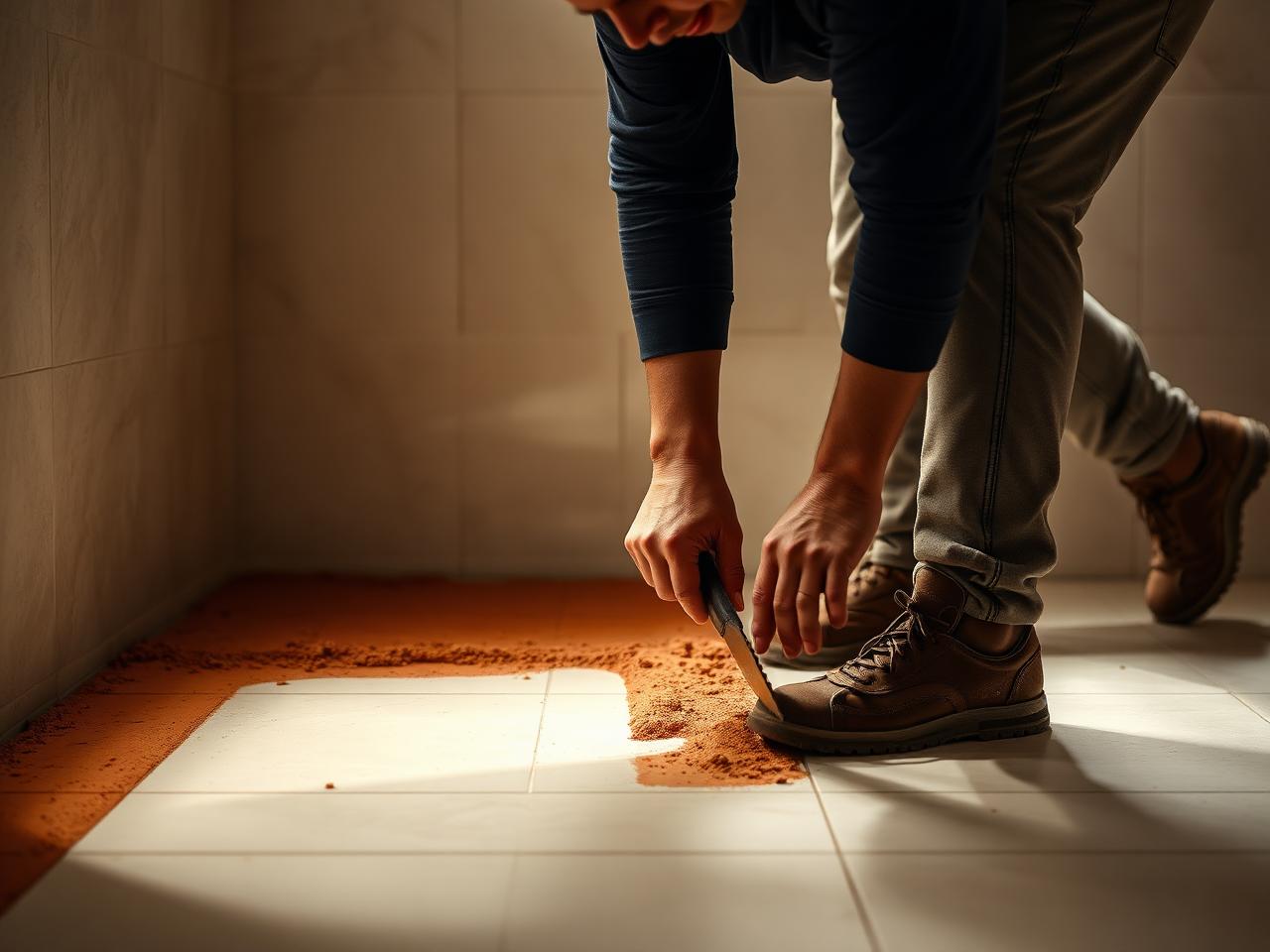
In la Vila Olímpica del Poblenou, crumbling grout on a terrace may appear to be a straightforward masonry repair. Regrouting, however, is not the same as stopping a leak: water can enter at wall junctions, thresholds, drains or concealed layers. Before requesting a quotation, distinguish powdery joints, moving tiles, standing water and staining on a ceiling below. The neighbourhood identifies the enquiry location, but does not imply that its buildings share a particular terrace construction or defect. A useful estimate separates visible finishing work from investigating the source of moisture.
Separate worn grout from drainage and waterproofing faults
Observe the surface before scraping out material or applying sealant. Photograph open joints, the wall junction and an accessible drain. If water pools after rainfall, a picture taken at that time helps show where it collects. Note whether damage is near a door, along a walking route or scattered across the terrace. Crumbling grout can result from wear or movement; it does not prove that the waterproofing membrane has failed. A hollow or rocking tile requires assessment of its bond and substrate. If dampness appears in the room below, fault tracing must consider concealed layers and perimeter details rather than only the visible joint. A masonry inspection should identify the finish, substrate, falls, drainage, movement joints and thresholds. Removal of tiles should follow an explained diagnostic need, not an assumption about local housing. A terrace that forms part of a communal roof may require coordination with the building community. Fresh grout alone cannot be promised to stop every leak.
Protect people from slips and prevent further water damage
Raised tiles can create trip hazards, while wet surfaces may be slippery. Avoid walking over unstable pieces and do not work close to exposed elevated edges without suitable protection. Do not put aggressive chemicals or tools into an unfamiliar drainage outlet. If water reaches electrical equipment, avoid touching wet installations and seek an appropriate specialist assessment. Major cracks, settlement or damaged railings call for broader building evaluation rather than cosmetic grouting. Spain's CTE DB-HS addresses health and moisture protection, while DB-SUA addresses safety in use. These are general technical references, not remote certification of a particular terrace. Where another flat is affected, record the visible symptoms and coordinate investigation before concealing them. The quotation should address safe access during the work as well as the condition of the finished surface.
Select grout and seals for the existing assembly
The correct joint material depends on whether the finish is ceramic, stone or something else, the joint width, substrate movement and exposure to weather. Products have different permitted depths, preparation requirements and curing conditions. Movement joints should not automatically be packed with rigid grout when a compatible flexible detail is required. At a wall or door, a surface bead of sealant does not replace continuous waterproofing where the assembly needs it. If tiles are lifted, document the revealed layers before closing the area again. An adhesive intended for interior use should not be assumed suitable outdoors. Follow product technical sheets rather than promising a particular lifetime from a brand name. Repairs must preserve safe thresholds and the intended route for surface water. A neat-looking joint can still conceal a moisture problem elsewhere.
Itemise regrouting separately from waterproofing investigation
Ask for a written estimate listing inspection, protection of adjacent finishes, controlled grout removal, cleaning, checks of tile bond and substrate, materials, application, curing, waste and taxes. If leakage is suspected, request a distinct diagnostic allowance and agree what additional opening of layers would involve. Regrouting a small area differs fundamentally from lifting a terrace, correcting falls or rebuilding a waterproofing system. If hidden damage is found, ask for evidence and approve a variation before the scope grows. Clarify who checks drains and junctions and how results can be assessed safely. The Catalan Consumer Agency explains written quotations and cost changes for home services. Communal roof areas may require building-management permission. No universal square-metre price applies to every terrace in la Vila Olímpica without knowing access, materials and concealed damage. A cosmetic improvement should never be described as proof that a leak has been fixed.
For masonry work in la Vila Olímpica del Poblenou, send photographs of grout, wall and door junctions and drains. Explain whether there is indoor dampness or a communal element, and request separate pricing for regrouting, investigation and any justified waterproofing work.
