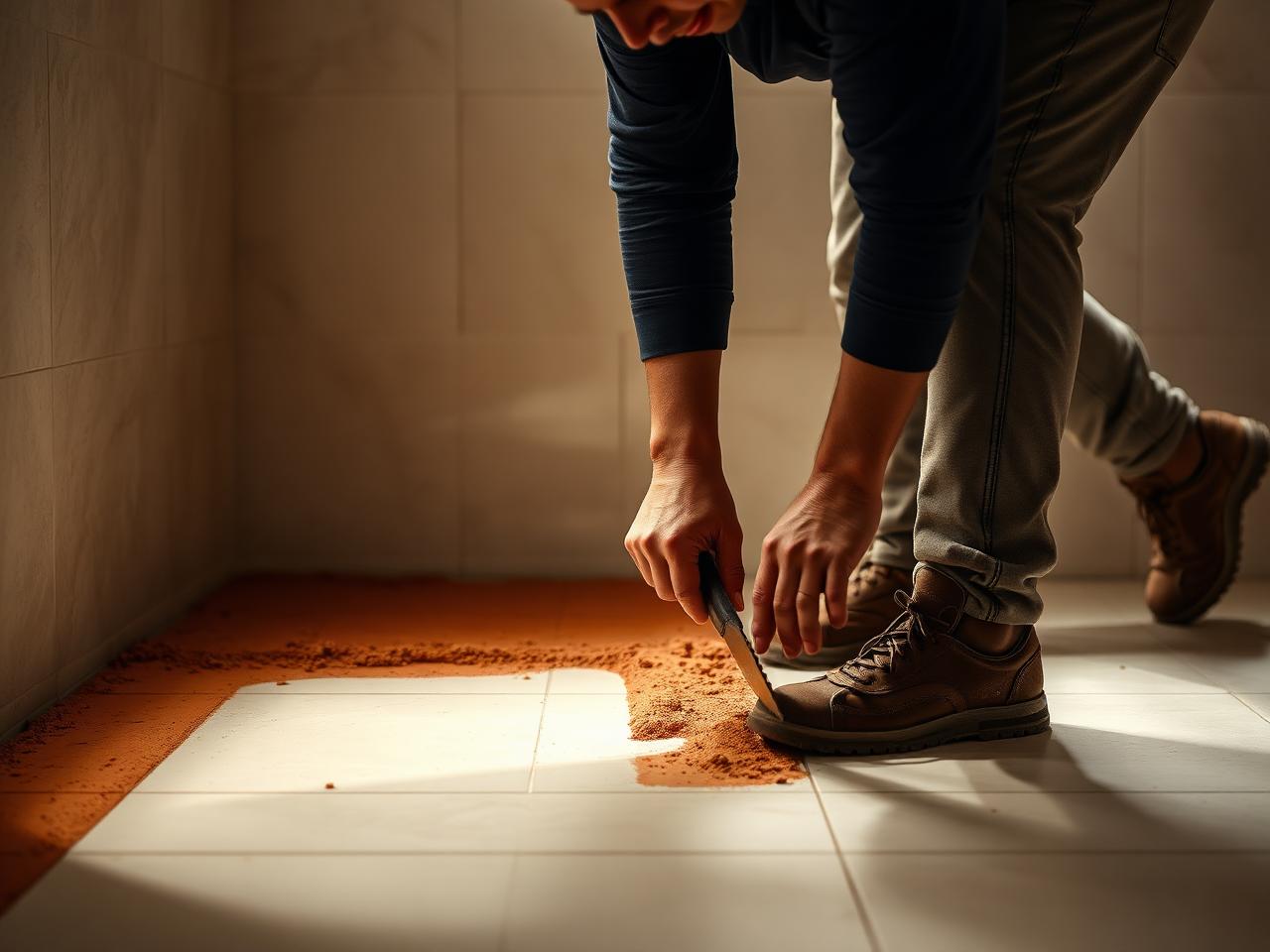
Masonry repairs in la Trinitat Vella may range from rebuilding a chipped step or threshold to repairing render, replacing loose tiles or investigating a crack. The right solution depends on the supporting material and the cause of damage. Barcelona City Council places la Trinitat Vella in Sant Andreu; that does not establish the condition of any particular building. For a useful estimate, explain where the defect is, whether it moves, whether water is involved and whether it affects a walkway. Provide overall photographs, close-ups and dimensions rather than assuming every crack needs a little mortar.
Distinguish worn edges, cracks and substrate failure
A crumbling step edge may result from impact, degraded mortar, moisture or movement. Before filling it, check whether the remaining material is sound and whether the finished step can remain safe to use. A cracked threshold may need loose material removed and its edge rebuilt, but displacement between the two sides calls for investigation. Describe cracks by direction, width, extent and change over time without automatically labelling them structural or cosmetic. For tiles, distinguish a broken unit from failed adhesive or movement in the substrate. Hollow sounds and visible movement can guide assessment, but the base still needs checking. Loose render must be removed back to a stable surface before new material is applied. Work at height, load-bearing elements, handrails and shared building areas may require specific safety measures and permissions. Local patching is not a substitute for technical investigation where there is deformation, active cracking or persistent water ingress. Explain what is known and what remains uncertain before choosing a repair.
Stop unsafe work and verify the finished surface
A sinking step, loose handrail or widening crack should not be covered with a cosmetic patch. Keep people away from the unsafe element and seek the appropriate assessment. If water is discovered behind a finish, identify the source before rebuilding; building health guidance addresses moisture but cannot diagnose a particular leak. Do not remove materials that may support loads without knowing their function. At completion, inspect flatness, joint continuity, adhesion, edges, appropriate surface grip and debris removal. Check that the new geometry does not create a trip point. Follow the product's curing conditions before loading the repair. Keep photographs of the prepared base and final finish, and request a list of outstanding issues. If a larger underlying cause lies outside the agreed work, it should be clearly documented rather than hidden beneath new render or tiles. Safety and durability are more important than a quick visual improvement.
Match mortar, adhesives and joints to the substrate
A repair mortar for an exposed step edge is not automatically suitable for tile joints or wall levelling. Consider substrate, application thickness, adhesion, absorption, water exposure and the manufacturer's curing instructions. A very rigid patch over a moving base may crack again. On walkways, the finished texture and level should not introduce slip or trip hazards; building guidance addresses safety in use. When replacing tiles, check size, thickness, layout, adhesive and joint continuity. If several tiles lift, replacing one may not address the underlying failure. New render requires a clean, stable base; salts or active damp should not simply be covered. At exposed thresholds and terraces, investigate waterproofing and junctions with door frames separately. Product data sheets should govern preparation and application rather than a universal mix recommendation. Protect adjacent finishes and remove debris as part of the job. A visually neat patch has little value if it is not bonded to a sound support.
Request separate costs for removal and rebuilding
Provide measurements of area, length and depth, plus access details and photographs of the substrate. The quotation should distinguish assessment, protection, removal of loose tiles or mortar, preparation, materials, application, curing, finishing, waste and cleaning. For a step or doorway, agree how safe access will be maintained while the repaired area cannot be used. For tiles, state whether matching spares exist and how colour or size differences will be handled. If removal reveals wider adhesion failure, ask for an explanation and agreement before extending the scope. The Catalan Consumer Agency publishes guidance on written estimates and changes to home repairs. Clarify transport, furniture protection and rubble disposal where relevant. A square-metre price alone cannot reflect the depth of removal or hidden defects. The neighbourhood name does not establish a price or completion time: condition, dimensions, materials and access are decisive. Keep a written record of exclusions and what will be checked at handover.
For masonry work in la Trinitat Vella, send photographs, dimensions and any signs of movement or moisture. Ask for separate lines covering removal, rebuilding, materials and final checks.
