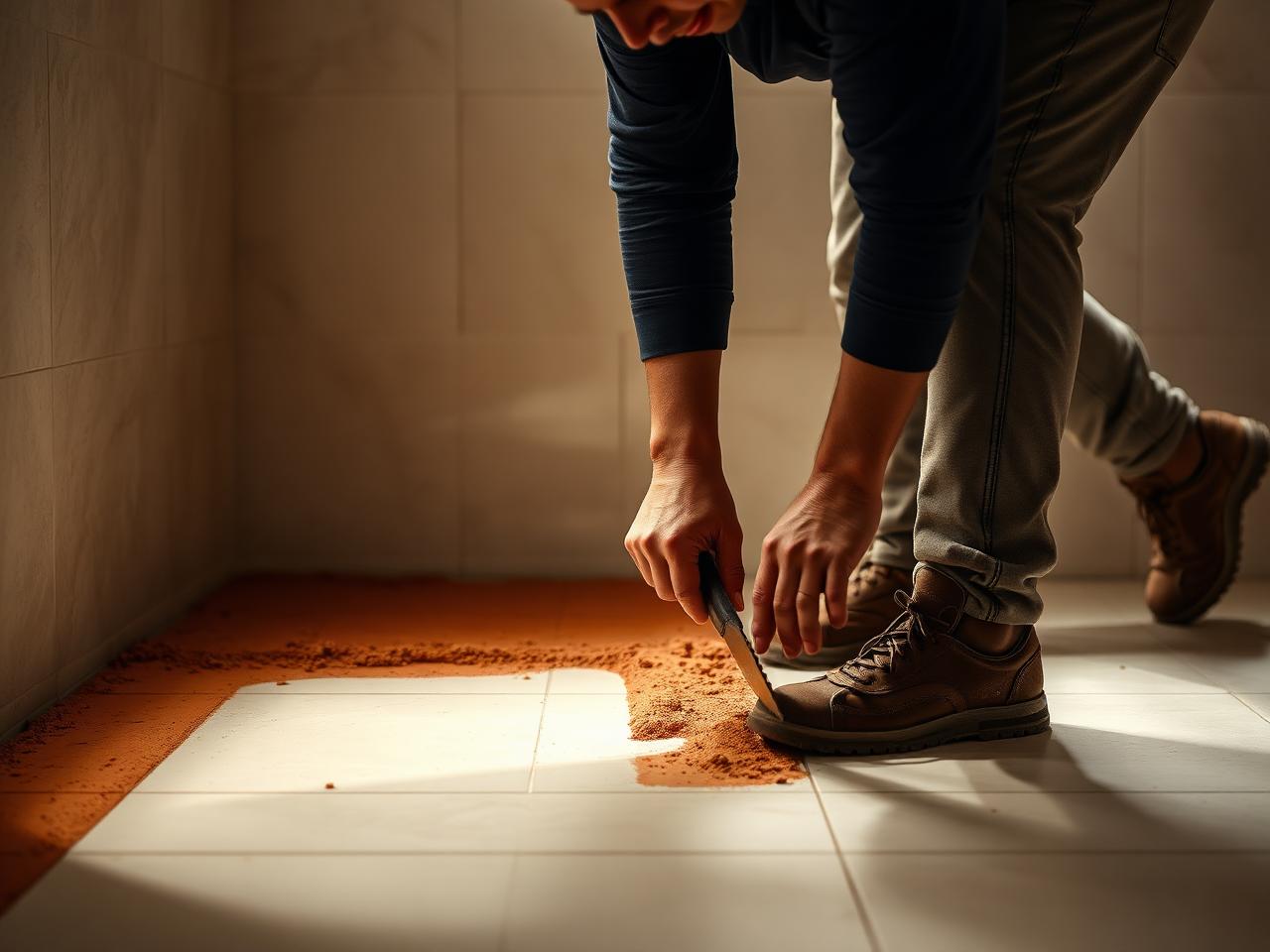
Masonry and tiling repairs in La Sagrera may involve replacing tiles, levelling a floor, repairing render or investigating a crack. These are different jobs and should not all be quoted as simply 'filling a hole'. La Sagrera is an official Barcelona neighbourhood, but the location name cannot establish a wall's construction or the cause of damp in a particular property. Describe the material, damaged area and whether the defect has changed over time. Photograph joints with doors, pipes and adjacent finishes; note loose or hollow-sounding tiles. Before choosing mortar, adhesive or paint, establish whether the problem is superficial or needs a competent technical inspection.
Prepare the substrate before applying a finish
Remove loose material only where safe and assess the adhesion of the base that remains. Clean dust as directed by the product instructions, check flatness and moisture, and choose compatible materials. For loose tiles, determine whether the failure lies in the tile, adhesive, substrate or water behind it. Installing a new tile over an unstable base can repeat the defect. For a damaged corner, consider impact protection and continuity with the existing finish. Check permitted application thickness, curing time and environmental conditions before using repair mortar. Locate concealed services before closing wall chases and record what has been repaired. A smooth appearance alone is not proof that the underlying defect has been resolved.
Cracks, loose material and warning signs
A fine crack in a surface finish is different from one that crosses several units, widens or accompanies deformation. Do not attribute damage to settlement, vibration or moisture without evidence. Where material could fall into a walkway or structural movement is suspected, restrict access and seek competent assessment before cosmetic repair. Do not conceal an active crack under thick filler. Near a bathroom or kitchen, investigate possible leaks or condensation before replacing the surface. Spain's building-code documents on safe use and moisture protection describe general requirements but cannot diagnose an individual property. Take dated photographs if a defect changes, and explain that history when requesting an assessment.
Floors, movement joints and other trades
An uneven floor can affect doors, furniture and safe movement. Measure level differences before applying a levelling compound and assess whether they come from the base, loose tiles or ongoing movement. Some joints allow movement while others simply fill gaps; do not replace a flexible joint with rigid mortar without checking its purpose. Near a shower, terrace or drainpipe, consider waterproofing and drainage before decorative tiling. Coordinate masonry with plumbing and electrical work where walls are opened. New finishes should not obstruct necessary maintenance access. If the original tile is no longer available, ask for an identified substitute and agree how visible the difference will be.
Measurements, itemised scope and handover
For a La Sagrera quotation, supply dimensions, close-up and wide photographs, access details and whether the area must remain in use. Separate investigation, removal, waste handling, preparation, materials, fitting, grouting, protection and cleaning. A small repair near concealed services may need more checks than a larger unobstructed area. If communal elements are involved or the work extends beyond minor repairs, confirm the relevant permissions before starting. Agree variations in writing before extra work is carried out. At handover, inspect joints, edges, apparently secure units, cleaning and outstanding defects. The Catalan Consumer Agency provides guidance on clear estimates for home services. Do not equate a newly painted surface with evidence of sound repairs underneath.
Send the La Sagrera address, photographs, measurements and defect history. Request a substrate assessment and itemised quote.
