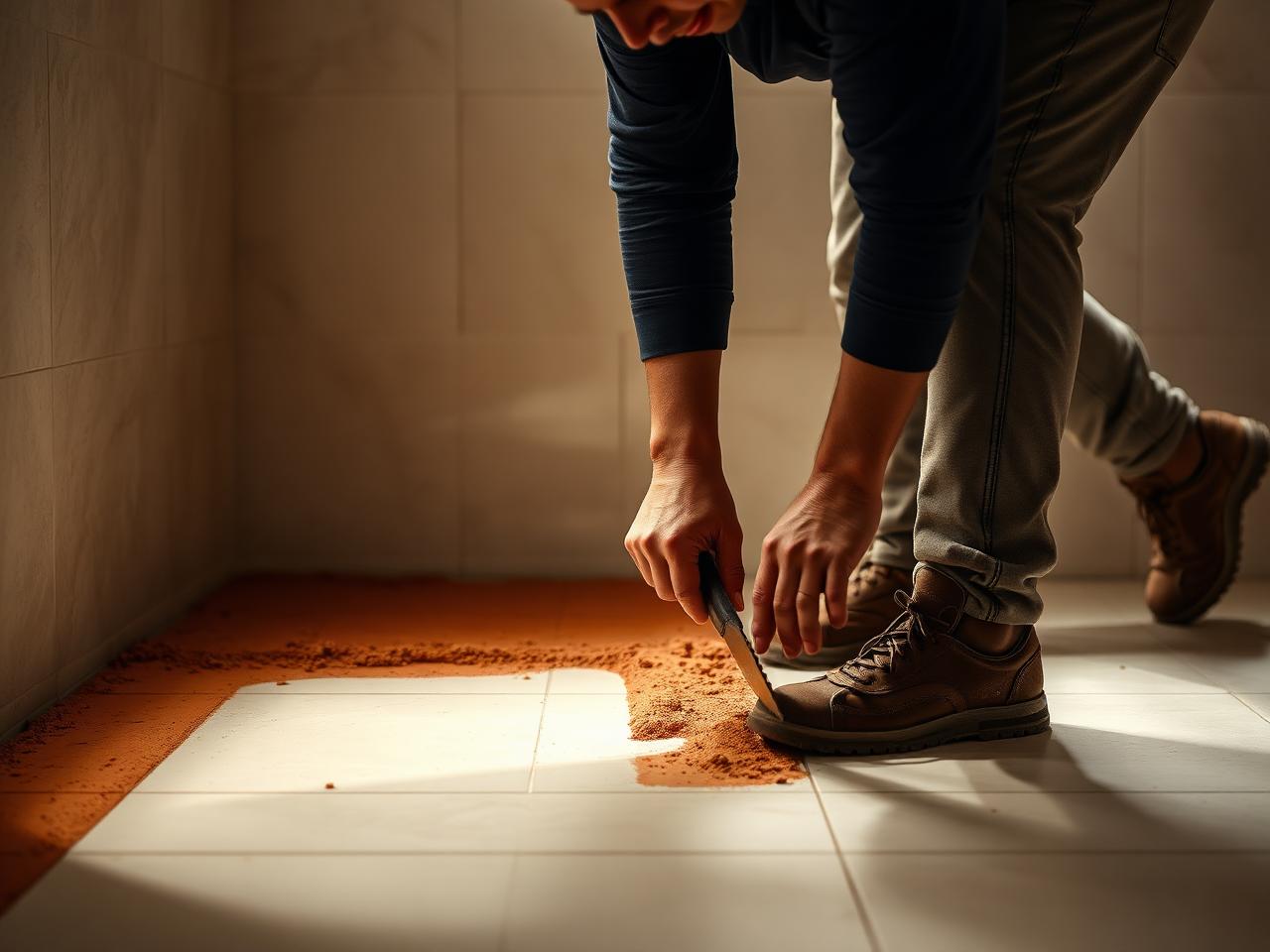
A hollow-sounding tile, open grout joint or crack in a terrace floor in el Putxet i el Farró needs a masonry assessment that separates the finish from the substrate and waterproofing beneath it. Replacing a loose tile will not cure water ingress if the underlying membrane or junction has failed. Barcelona City Council's guide places the Vil·la Urània Environmental Classroom in this Sarrià-Sant Gervasi neighbourhood. That identifies the area but does not establish how every terrace there was built. Before requesting a quotation, say whether the terrace is private or communal, whether cracks change after rain, what rooms lie below and whether a drain is nearby. Do not step on unstable tiles or glue down a raised edge without understanding the cause.
Distinguish failed adhesion from substrate or drainage problems
A tile that sounds hollow may have lost adhesion, but the condition of the substrate and possible movement or dampness also matter. Observe whether grout joints repeatedly open, several tiles lift together or damage follows a single impact. Do not break out a large area before establishing the scope and checking for concealed services. On a terrace, note whether rainwater ponds and whether visible drains are clear of debris, without inserting tools into shared pipework. Falls, thresholds, upstands and waterproofing form a connected system; water may emerge some distance from its entry point. Spain's DB-HS sets criteria for moisture protection, although the requirements for a particular repair depend on the building and work. Ask the contractor to distinguish isolated tile replacement, substrate repair, fall correction and membrane renewal. None should be described as a guaranteed cure without an inspection and an appropriate test.
Trip hazards, elevated edges and neighbouring properties
Restrict access if a raised tile presents a trip hazard. Do not work near a balcony edge, parapet or railing that appears unstable. A wide or progressing crack in an element that could be structural may require specialist assessment rather than cosmetic masonry. DB-SUA addresses safe use and slip resistance, with specific application depending on the space and alteration. If water affects the flat below, or the terrace forms part of communal building fabric, establish permissions and responsibilities before drilling through waterproofing or changing a shared drain. Photograph the initial condition and agree how neighbouring spaces and access routes will be protected. The neighbourhood name cannot tell a contractor the slab type, drainage fall or membrane condition at a particular address.
Compatible mortar, joints and waterproofing details
Identify the tile type, substrate, adhesive and existing grout before selecting a repair system. Not every mortar bonds reliably to every surface, and sealants differ in their suitability for outdoor water exposure. If tiles must be lifted, agree how the base will be inspected and how door thresholds, corners and drains will be treated. Matching the original colour and size may be difficult in a partial repair; the quotation should say so. Where waterproofing is involved, the specification should describe the layers and continuity at junctions, not merely name a product. Ask for technical data and suitable drainage or watertightness checks. Keep photographs before the layers are covered. After completion, check for loose tiles, dangerous edges and blocked outlets.
Compare a small repair with a full terrace intervention
An itemised quotation should separate protection, tile removal, waste disposal, substrate repair, any waterproofing, adhesive, new tiles, grouting, sealing and final checks. Cost depends on area, access and concealed defects; there is no verified standard terrace-repair price for el Putxet i el Farró. Explain whether other residents are affected and whether communal approval is needed. Catalonia's consumer agency recommends written quotations and approval of extra charges before work begins. If only a few tiles are to be replaced, ask which possible underlying problems remain outside the scope. If the whole surface is proposed for removal, request a technical explanation. Retain invoices, product references and test results, and do not describe an unverified leak as permanently resolved.
For a masonry enquiry in el Putxet i el Farró, describe the tiles, cracks and possible water ingress, share safe photographs and request a quotation separating finishes, substrate and waterproofing.
