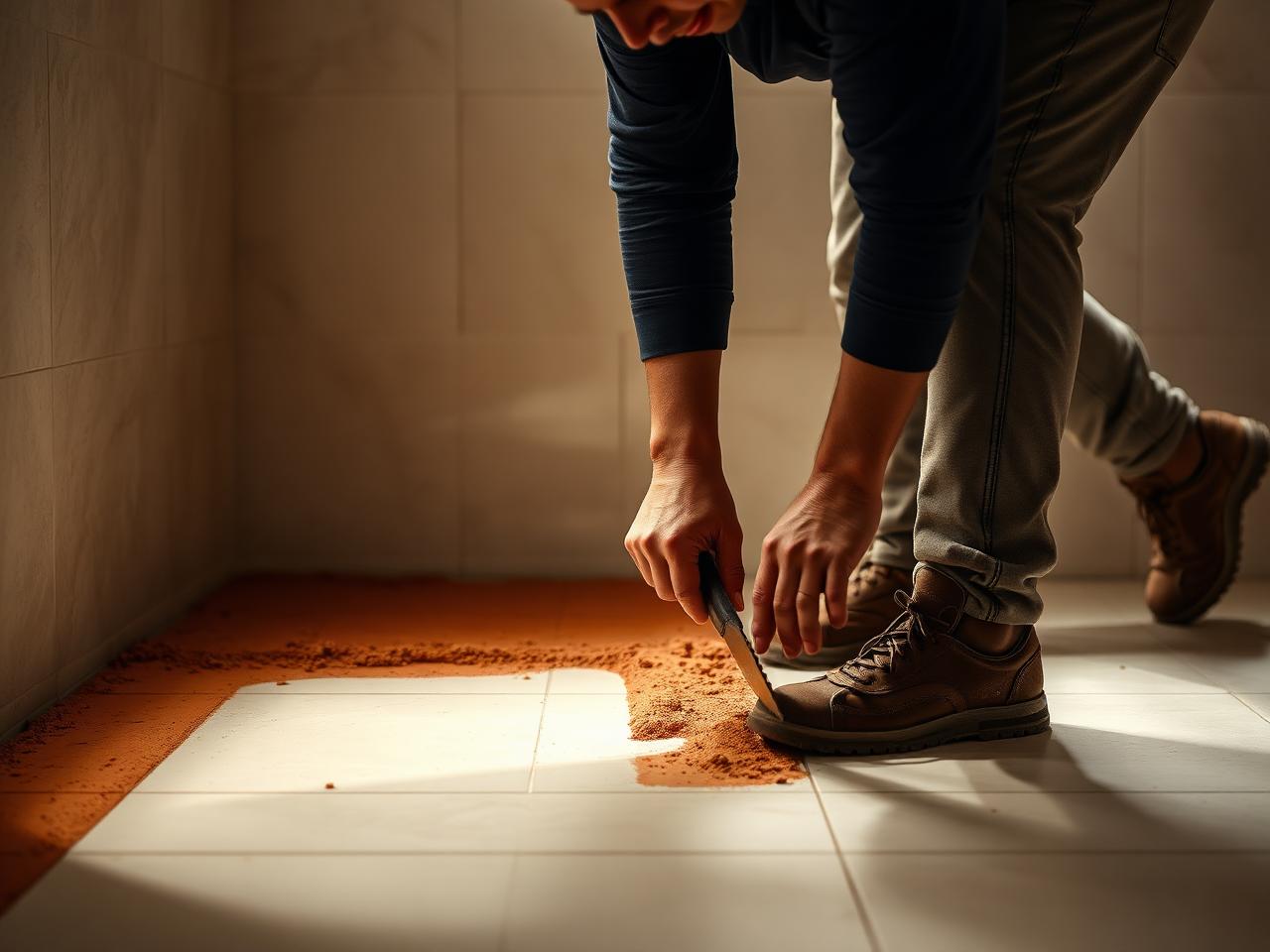
If tiles lift in a bathroom, kitchen or internal passage in Baró de Viver, sticking them back without investigating the substrate may lead to another failure. Possible causes include ageing adhesive, movement in the base, moisture, rigid joints or impact damage. Not every hollow-sounding tile means the whole floor needs replacing, and a wet surface does not by itself prove a hidden leak. Explain how many tiles move, whether joints are cracking and when the problem began. This does not assume a particular building type or a known defect at any address in the neighbourhood. The repair should follow a diagnosis of the cause and the extent of the damage.
Checking the problem
Before lifting tiles, keep people away from sharp edges and unstable areas. Photograph the pattern of movement, joints and any damp marks without removing more material yourself. A professional can check adhesion, screed condition, flatness, movement and possible water ingress. Where damage is close to a shower or sink, the source of moisture should be investigated before closing the surface. A loose tile in the middle of a dry room may require a different approach. Replacing visible adhesive is not enough if the underlying screed is crumbling or waterproofing has failed. Ask which layers will be inspected and what evidence supports the proposed repair.
When to seek help
Seek an assessment when several tiles lift, sharp edges cause injury risk, floor levels change, dampness persists or joints reopen. If there is an active leak, protect the area and identify its origin before covering the damage. In a bathroom, a cosmetic repair may conceal a waterproofing issue; in a walkway, an uneven tile can become a trip hazard. Spain's CTE DB-SUA addresses safety in use and DB-HS addresses hygiene requirements within their respective scopes, but neither replaces inspection of the existing floor. A local patch cannot be assumed to solve movement across a wider substrate. Keep the area out of use where it is unsafe.
Materials and scope
Replacement tiles need a suitable size, thickness, finish and performance for the intended use. A visually similar tile may differ in shade, texture or manufacturing tolerance, while new grout may stand out beside old joints. If the original range is unavailable, a defined transition may be more realistic than promising an invisible match. Wet areas need a complete compatible system: sound substrate, adhesive, joints and appropriate sealing. Do not cover unresolved moisture. If work touches drains, hidden services or shared building elements, clarify responsibilities and permissions before starting. Ask how the proposed materials suit the actual base.
A clear quotation
Request a written quotation separating inspection, tile removal, waste disposal, substrate preparation, justified base or waterproofing repairs, tile supply, laying, grouting, sealing and cleaning. Mention whether you have spare tiles and whether part of the room must remain usable. Replacing a few tiles is different from rebuilding a damp screed; a fixed figure without inspection can be misleading. The Catalan Consumer Agency advises clear quotations and agreement before extra charges. Ask about material-dependent curing time, temporary access restrictions, the invoice and final checks of stability and finish. Photographs can help scope an enquiry but cannot establish the hidden condition.
Describe the affected area and share photographs to request a written assessment.
