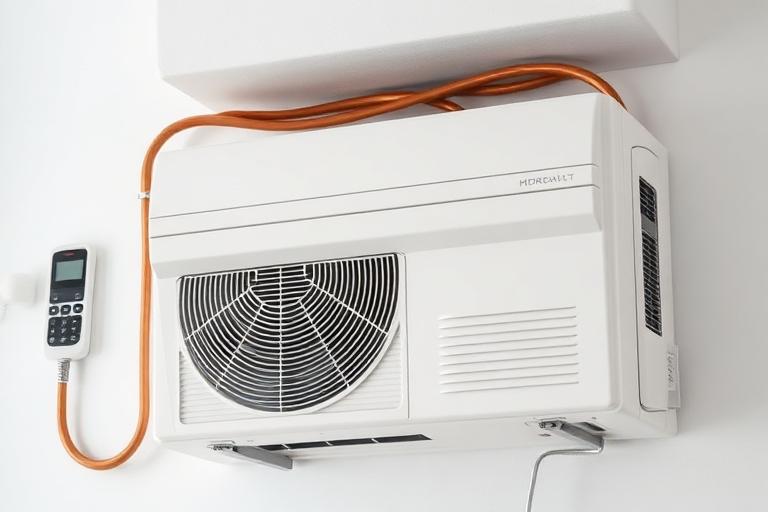
When requesting air-conditioning help in La Bordeta, distinguish a unit that will not start, one that runs but cools poorly, and one that leaks water or makes unusual noise. Record the make and model from a visible label, approximate age if known, error code, selected mode and when the symptom began. Do not remove covers or handle wiring or refrigerant lines. The neighbourhood name does not prove that a particular property has a balcony, courtyard or suitable façade for an outdoor unit. Check the proposed location and any building-management restrictions before ordering equipment. A quotation based solely on room area may miss orientation, glazing, insulation, occupancy and ventilation. This page is practical preparation guidance, not a claim about completed installations or contractor availability.
Sizing, outdoor units and pipe routes
For a new split system in La Bordeta, ask for a reasoned cooling-load assessment and an explanation of the proposed capacity. Floor area matters, but so do solar gains, orientation, insulation, windows, occupancy and how the room is used. Review refrigerant-pipe routing, condensate disposal, electrical supply, maintenance access and manufacturer limits on separation between units. Never assume a façade or courtyard can accept an outdoor unit without approval. If work affects shared structures, ask building management about permissions and check the relevant municipal conditions before installation. Spain's Regulation on Thermal Installations in Buildings, known as RITE, sets safety and efficiency requirements, while the obligations depend on the equipment and scope of work. Ask the contractor to distinguish site checks from installation work in the quotation.
Poor cooling, dripping and unusual noise
If the unit blows air but does not reach the selected temperature, check only accessible settings, open windows and visibly dirty filters in accordance with the manual. A blocked filter can reduce airflow but cannot explain every loss of cooling. Ice on pipework, repeated short cycles or fault codes require diagnosis; do not add refrigerant yourself. If an indoor unit drips where water may reach electrical equipment or vulnerable finishes, stop using it and seek competent help. A condensate drain, tray, insulation defect or installation issue may be involved, and the cause should be established before replacing parts. Note whether noise appears at start-up, while running or on shutdown. A short video can help describe it but cannot reliably identify a faulty compressor, fan or mounting.
Efficiency, ventilation and ongoing care
An efficient appliance does not compensate for poor sizing or installation. Compare seasonal efficiency and sound data for the exact models proposed, not generic marketing labels. Ask how filters, condensate trays and drains can be accessed and what maintenance is appropriate for the equipment and its use. A split unit usually recirculates indoor air; it should not automatically be treated as a substitute for outdoor-air ventilation. If replacement is suggested for a unit that still works, ask for a comparison with repair or control adjustments and the evidence behind the recommendation. Sealed refrigerant circuits require appropriately competent work under the applicable rules. Simply topping up refrigerant without investigating a suspected leak is not a satisfactory diagnosis. Keep the manufacturer instructions for future use.
Quotation detail and commissioning checks
A useful quotation should identify the exact model and capacity, indoor and outdoor locations, brackets, estimated pipe length and insulation, drainage, electrical connection, access equipment, openings, reinstatement and commissioning. If routing cannot be confirmed without a survey, that limitation should be stated. Ask which building permissions are required and who will obtain them. Work at height may involve additional access and safety arrangements that need pricing. On completion, request operating instructions, relevant paperwork and an explanation of checks on drainage, mounting and performance. Agree in advance how an old unit and its refrigerant will be handled. Tenants should consult their landlord before permanent installation. This guidance does not promise fixed prices, immediate attendance or particular qualifications.
Give the model, fault symptoms, proposed unit positions and any known courtyard, façade or building restrictions when requesting a quote.
