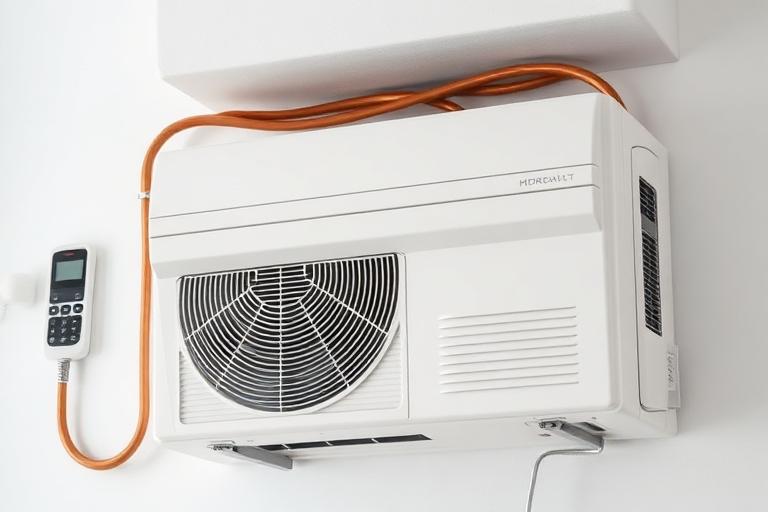
If an outdoor air-conditioning unit starts transmitting vibration into a wall or a low hum into another room in El Camp de l'Arpa del Clot, a faulty compressor is not the only possible explanation. Brackets, vibration mounts, pipe contact, the fan and the building structure can contribute in different ways. This page explains how to request an air-conditioning investigation in this Sant Martí neighbourhood of Barcelona without claiming knowledge of individual installations or promising immediate attendance.
Record when the vibration starts and where it is heard
Note whether the noise begins at start-up, continues throughout operation, changes with mode or appears as the unit stops. From a safe location, distinguish airflow noise, metallic rattling and low-frequency vibration felt through a wall. Record whether fan speed or the chosen temperature changes the symptom, without touching the outdoor unit. Vibration transmitted into a partition does not prove compressor failure: a rigid bracket, pipe touching masonry or loose cover may be involved. Do not remove panels, touch electrical connections or bend refrigerant lines. A short recording from a safe position can help describe the sequence, but it cannot replace inspection and suitable measurements.
Stop operation if fixings may be unsafe
If the unit visibly shifts, bolts are loose, a bracket looks distorted, there is a burning smell or components could fall, stop using it and seek appropriate help. Do not lean out to hold the unit or attempt work at height from a window. In an immediate danger to people, contact emergency services. A steady but annoying hum calls for a different response from a mounting that may fail. Do not wedge foam, timber or improvised pads beneath the equipment without assessing loads and compatibility. Such changes can compromise stability or ventilation. Never cover grilles to suppress noise. Safe access, airflow and the manufacturer's requirements must remain part of the repair plan.
Separate bracket faults from fan and refrigerant problems
An inspection may cover anchor bolts, brackets, vibration isolators, pipe contact points, casing fasteners and fan condition. Each finding leads to a different job. Replacing a mount will not repair a worn bearing; changing a fan will not prevent a refrigerant pipe from knocking against the wall. Ask for the evidence before agreeing to replacement parts. Work involving refrigerants or opening the refrigerant circuit belongs with appropriately qualified personnel, not household experimentation. Spain's Regulation on Thermal Installations in Buildings covers safety, maintenance and acoustic conditions within its scope. The appropriate remedy depends on the actual installation and cannot be described as guaranteed complete silence.
Request an estimate that explains access and testing
Ask for written terms covering the visit, mounting inspection, functional tests, measurements where appropriate, labour, replacement parts, working-at-height access and tax. Confirm whether community permission, special access equipment or a return visit may be needed. Adjusting an accessible bracket is not equivalent to replacing the outdoor unit or altering refrigerant pipework. The Catalan Consumer Agency advises obtaining an estimate and agreeing extra charges before work proceeds. There is no universal price, guaranteed arrival time or absolute noise reduction promise. Keep the invoice and explanation of the checks. A technical diagnosis should also be distinguished from a formal acoustic compliance assessment.
Describe when the unit vibrates and request a written air-conditioning investigation quotation for El Camp de l'Arpa del Clot.
